


Flight attendants rarely announce specific rules about travel pillows, yet many passengers still wonder whether they will be asked to remove one during takeoff or landing. The answer depends less on the pillow itself and more on how it affects safety, posture, and cabin readiness. In practice, enforcement varies by situation, not brand. Understanding what cabin crew actually look for during critical flight phases helps you avoid unnecessary stress and fly more comfortably without breaking any rules.
If you want a breakdown of the written airline rules, see our full guide on takeoff and landing policies. This article focuses on what flight attendants actually enforce in practice.
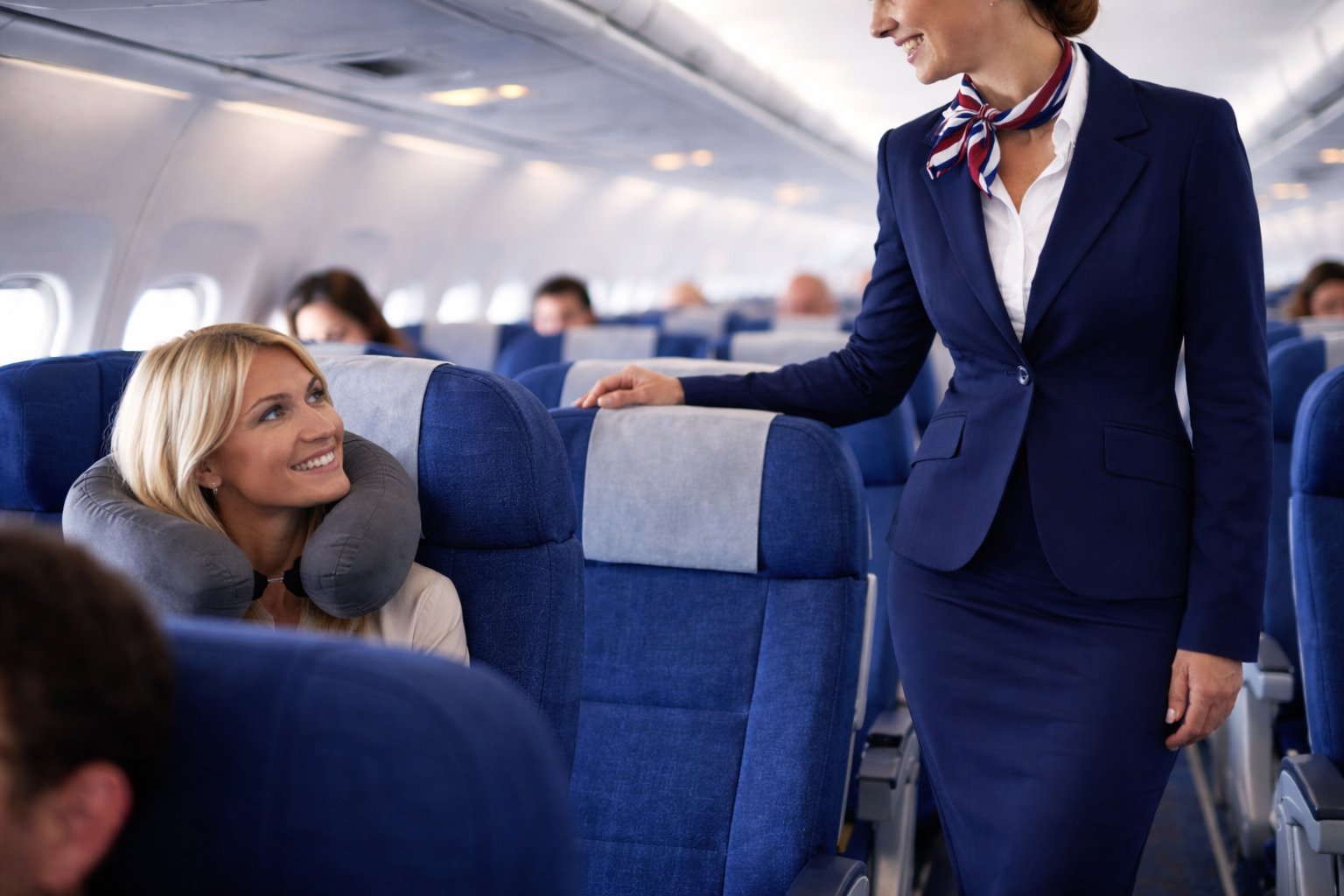
Category: Travel Pillows
Author: Product Developer (Independent, No Sponsorships)
Written by a product developer who reviews travel gear with zero sponsorships.
Clear, technical breakdowns of materials, ergonomics, and real-world use.
Table of Contents
- What Airline Rules Actually Say About Travel Pillows
- Why Enforcement Depends on Safety, Not Comfort
- What Flight Attendants Really Enforce in Practice
- When Travel Pillows Get Flagged During Takeoff or Landing
- How Different Pillow Designs Are Treated by Crew
- How to Use a Travel Pillow Without Getting Stopped
- International Flights and Airline Differences
- Who This Matters Most For (Use-Case Framing)
- Conclusion: Follow the Rule, Not the Rumor
- FAQ: Travel Pillows and Airline Rules
What Airline Rules Actually Say About Travel Pillows
Most passengers assume there must be a clear written rule somewhere stating whether travel pillows are allowed during takeoff and landing. In reality, airline safety manuals focus on passenger posture, restraint access, and cabin visibility rather than on specific personal comfort products. Travel pillows sit in a grey area because they are worn, removable, and usually soft. That makes them different from bags, blankets, or electronic devices, which are explicitly regulated.
Instead of listing individual accessories, airlines rely on broad safety standards that apply to anything a passenger brings into the seat area. These standards are designed to work across aircraft types, seating layouts, and emergency procedures. As a result, enforcement is based on how an item affects readiness, not what the item is called.
Why airline policies rarely mention neck pillows directly
Airline operations manuals are written for flight crews, not consumers. They prioritize evacuation speed, visual checks, and physical access over product categories. Since neck pillows rarely interfere when used correctly, they are not named explicitly. Including every minor accessory would make safety procedures unmanageable and inconsistent across fleets.
How “loose item” rules apply to wearable pillows
Most airlines classify removable pillows under “loose items” or “personal effects.” During critical phases, these items must not block seat belts, restrict movement, or prevent crew from verifying passenger readiness. A wearable pillow that stays clear of these areas is typically acceptable. Problems arise only when positioning interferes with these requirements.
Why Enforcement Depends on Safety, Not Comfort
Flight attendants are not evaluating whether a travel pillow feels good or helps you sleep. Their responsibility during takeoff and landing is to confirm that every passenger can be restrained, seen, and moved quickly if needed. Comfort is secondary to operational readiness. As long as a pillow supports these requirements, it is usually ignored. When it interferes, enforcement becomes immediate.
This is why two passengers using the same pillow can have completely different experiences. One may never be questioned, while the other is asked to remove it. The difference is almost always related to positioning, posture, and visibility rather than brand or design.
Why seat belts, posture, and visibility matter
During critical flight phases, cabin crew must verify that seat belts are fastened correctly, passengers are seated upright, and heads are positioned in a way that allows rapid visual confirmation. A pillow that obscures the belt buckle, pushes the head forward, or blocks facial visibility makes this verification harder. From a safety perspective, that creates unnecessary uncertainty in an already time-sensitive environment.
Why cabin readiness matters more than personal comfort
Takeoff and landing carry the highest operational risk. Crews are trained to minimize variables during these moments. Anything that slows response time, complicates evacuation, or interferes with passenger movement is treated as a potential hazard. Even a comfortable pillow becomes a problem if it compromises readiness. This is why enforcement focuses on function, not convenience.
What Flight Attendants Really Enforce in Practice
In real-world operations, flight attendants do not actively look for travel pillows to remove. During pre-takeoff and landing checks, their focus is on seat belts, seat position, tray tables, window shades, and overall passenger readiness. A properly positioned pillow that does not interfere with these elements is usually treated as irrelevant.
Most enforcement decisions are made quickly and visually. Crew members scan rows in seconds, not minutes. If a pillow blends into a compliant posture, it rarely becomes a topic of conversation. This is why many frequent travelers wear neck pillows through dozens of flights without ever being questioned.
When cabin crew usually ignore travel pillows
Cabin crew typically ignore pillows when the passenger is seated upright, the belt is visible and fastened, and the head remains within the natural seat outline. Soft U-shaped or scarf-style pillows worn loosely fall into this category. These designs compress easily and do not change the passenger’s profile in a way that raises concern.
Passengers who appear alert, responsive, and prepared for instructions are also less likely to be scrutinized. From a crew perspective, visible compliance reduces perceived risk.
When they are likely to intervene
Intervention usually happens when a pillow alters posture or obstructs checks. Common triggers include forward head tilt, hidden seat belt buckles, tightly braced neck supports, or bulky foam structures pressed against the seat. These setups make it harder to verify readiness.
Crew may also intervene when a passenger appears disengaged or unresponsive. In those cases, even minor issues are corrected to ensure full compliance before critical phases.
When Travel Pillows Get Flagged During Takeoff or Landing
Travel pillows are rarely removed at random. They tend to get flagged only when they create a visible safety concern during cabin checks. The issue is not the presence of a pillow but whether it interferes with restraint verification, seat configuration, or passenger movement during critical phases. These moments are fast and procedural, so anything that complicates the scan stands out immediately.
Blocking seat belt access or head movement
One of the most common triggers is obstructed seat belt access. If a pillow hides the buckle area, shifts the belt upward from the pelvis, or makes it difficult to confirm proper fastening, crew may ask for adjustment or removal. Similarly, a pillow that restricts natural head movement or locks the neck into a rigid forward position can raise concern. During takeoff and landing, passengers must be upright and able to respond quickly.
Interfering with tray tables or seat backs
A pillow wedged between the passenger and seat can prevent the seat from fully locking upright. If tray tables do not sit flush or seat backs cannot return to their required position, crew will correct the issue. Even soft pillows can create friction points if compressed awkwardly.
Oversized or rigid pillow designs
Large foam braces or structured loop designs occupy more space and change the passenger’s profile. When a pillow appears bulky or tightly braced against the seat, it attracts additional scrutiny during safety checks.
How Different Pillow Designs Are Treated by Crew
While enforcement depends primarily on positioning, certain pillow designs are perceived differently during safety checks. Cabin crew evaluate what they see quickly: bulk, rigidity, and how clearly they can confirm seat belt use and upright posture. Some designs naturally blend into a compliant seating position, while others change the passenger’s silhouette more noticeably.
U-shaped pillows
Traditional U-shaped pillows are the most familiar design to cabin crew. When worn loosely around the neck, they compress easily and do not significantly alter posture. Because they sit within the shoulder line and rarely extend beyond it, they are usually assessed as low-impact accessories during compliance checks.
Scarf and wrap-style pillows
Scarf and wrap-style pillows tend to be even less conspicuous. For example, designs like the Trtl rely on this low-profile, fabric-based approach and usually blend into compliant seating positions. Their flexible fabric construction allows them to contour closely to the body without adding visible bulk. From a crew perspective, they resemble clothing more than equipment, which reduces the likelihood of scrutiny as long as posture and belt visibility remain clear.
Loop and brace-style pillows
Loop and structured brace-style pillows provide more defined support and occupy more space around the neck and shoulders. Their rigid elements can change head positioning or extend outward slightly, making them more noticeable during quick cabin scans. While not automatically problematic, they are evaluated more carefully for compliance. Loop designs such as the Infinity Pillow are more noticeable during cabin checks because of their structured shape.
How to Use a Travel Pillow Without Getting Stopped
Most issues with travel pillows can be avoided through simple positioning adjustments during critical flight phases. Cabin crew are not evaluating comfort setups in detail. They are checking for visible compliance. Small changes in how a pillow is worn often determine whether it attracts attention.
Best positioning during takeoff and landing
During takeoff and landing, the safest approach is to keep the pillow loose and compact. It should sit within the shoulder line, leave the seat belt buckle clearly visible, and allow the head to remain upright. Avoid pressing the pillow tightly against the seat or using it to brace the head forward. If the pillow compresses naturally and does not alter posture, it is unlikely to be questioned.
When to remove and when to put it back on
If a pillow feels bulky, rigid, or restrictive, removing it briefly is usually the simplest solution. Many experienced travelers place it on their lap during takeoff and reapply it once the aircraft reaches cruising altitude. After landing, the same approach applies until the aircraft has exited the runway. This minimizes friction while preserving comfort when it matters most.
International Flights and Airline Differences
Basic safety principles during takeoff and landing are consistent worldwide. Seat belts must be fastened, seats upright, and passengers clearly visible to cabin crew. These standards are established through international aviation authorities and adopted across major carriers. As a result, travel pillow rules are structurally similar on domestic and international flights.
What varies is enforcement style. Some airlines emphasize strict procedural compliance, while others allow more flexibility when passengers appear attentive and properly positioned. Regional culture, training practices, and cabin workload all influence how closely rules are applied in practice.
Southwest is a good example of why this distinction matters. A normal neck pillow may be perfectly fine to bring onboard, while a design that straps to the seat can become a separate question once you’re actually using it. I broke down the current Southwest travel-pillow rules in more detail here.
Long-haul international flights may involve more relaxed oversight once cruising altitude is reached, but critical phases remain consistent. Travelers should assume that posture and visibility expectations apply regardless of destination or carrier.
Who This Matters Most For (Use-Case Framing)
Understanding how travel pillow rules are enforced is especially valuable for certain types of travelers. Knowing what cabin crew actually look for reduces unnecessary stress and helps you make practical comfort decisions.
Frequent flyers
Frequent travelers benefit from minimizing friction during routine flights. Wearing a pillow correctly avoids repeated adjustments and unnecessary interactions with crew. Over time, this creates a smoother, more predictable travel experience, especially on tight schedules.
Long-haul travelers
On long-haul routes, conserving energy matters. Knowing when a pillow is acceptable allows you to rest early without risking interruptions. Using a compliant setup during takeoff and switching to a more supportive position at cruise helps maintain comfort across extended flights.
Travelers who need stronger support over long flights may want to compare structured designs like the Cabeau Evolution Earth and Trtl Plus.
Nervous or first-time flyers
For anxious or inexperienced travelers, uncertainty around rules can increase stress. Clear expectations reduce second-guessing and prevent awkward corrections. Understanding enforcement standards provides reassurance and helps maintain focus on the journey rather than minor compliance details.
Conclusion: Follow the Rule, Not the Rumor
Travel pillows are not secretly banned during takeoff and landing. Most airlines do not regulate them by name, and flight attendants do not remove them arbitrarily. Enforcement centers on posture, seat belt visibility, and cabin readiness. If a pillow supports these requirements, it is usually acceptable. If it interferes, it becomes a problem. Instead of relying on rumors or online anecdotes, focus on visible compliance. A simple adjustment in positioning is often enough to keep both comfort and safety aligned.
FAQ: Travel Pillows and Airline Rules
Can I wear a travel pillow during takeoff and landing?
Yes, you can usually wear a travel pillow during takeoff and landing if it does not block your seat belt, restrict head movement, or prevent an upright position. Soft, compact designs are rarely questioned.
Will flight attendants make me remove my neck pillow?
Flight attendants may ask you to remove a pillow if it hides the belt buckle, pushes your head forward, or makes posture difficult to verify. Removal is based on safety checks, not brand.
Are memory foam travel pillows allowed on planes?
Memory foam pillows are allowed, but bulky or rigid models are more likely to attract attention during compliance checks, especially if they alter head position.
Do airline rules specifically ban travel pillows?
Most airline policies do not mention travel pillows by name. Rules focus on seat belts, posture, and loose items. Enforcement depends on how the pillow affects these requirements.
Are travel pillow rules different on international flights?
Basic rules are similar worldwide, but enforcement style varies by airline and region. Some crews are stricter during checks than others.
Should I take off my pillow before takeoff?
If your pillow feels bulky or restrictive, removing it until cruising altitude is the safest approach. Many experienced travelers reapply it after climb.
Can I get in trouble for refusing to remove a pillow?
Yes. Ignoring a crew request can lead to escalation. It is always better to comply and reapply the pillow later.