


Finding the best travel pillows for tall people is harder than it sounds. Most travel pillows are designed around average seat height and neck length, which creates a quiet mismatch for taller travelers. The pillow often sits too low, the headrest lands somewhere around the upper back, and the neck tilts forward instead of resting in a neutral position.
This is why many tall passengers feel like travel pillows almost work, but never quite reach the right height. The problem usually isn’t the softness of the pillow. It’s the geometry between the seat, the headrest, and the neck.
Understanding that relationship changes how you evaluate travel pillows reviews. In this guide, we’ll explain why tall travelers run into these issues, how seat height and neck angle affect support, and which pillow designs actually work better when you sit higher than the average passenger.
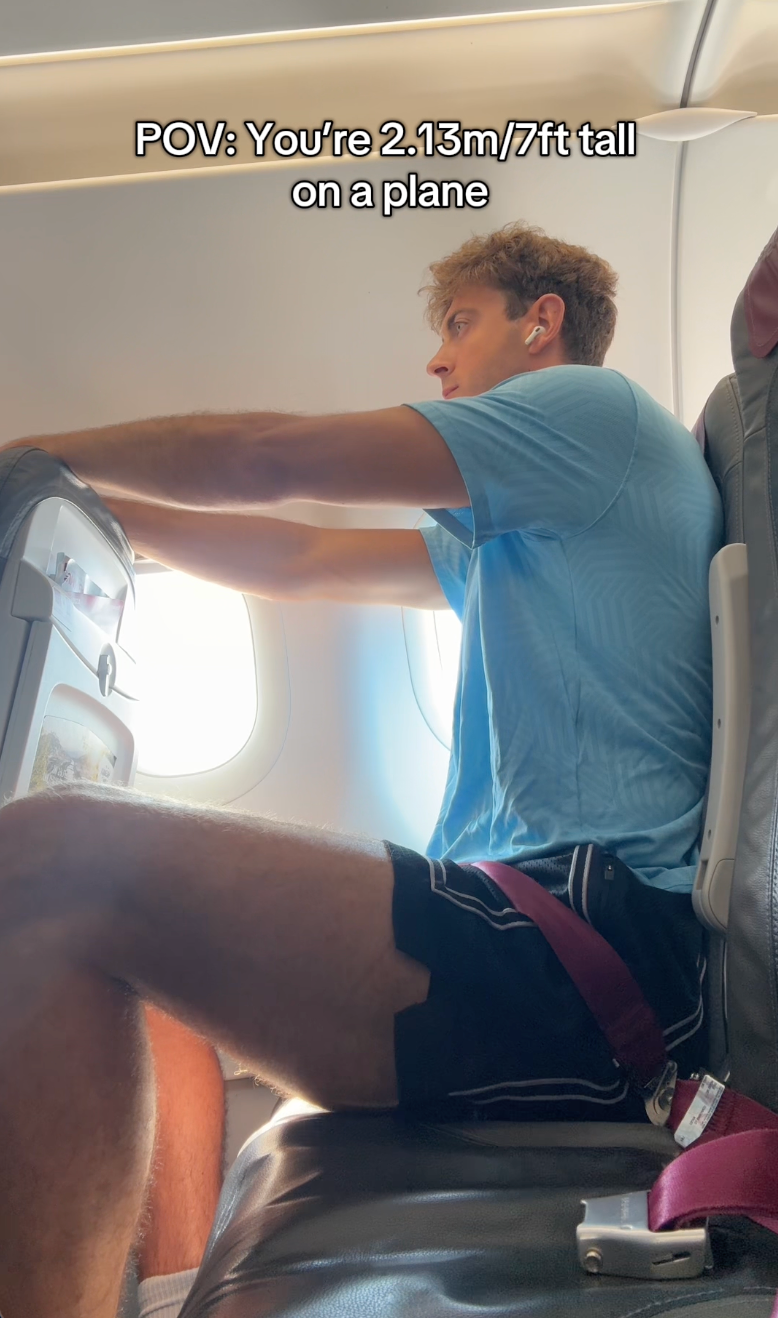
Original video: https://www.tiktok.com/@tobias_krick/video/7522873668800662806
Category: Travel Pillows
Author: Product Developer (Independent, No Sponsorships)
Written by a product developer who reviews travel gear with zero sponsorships.
Clear, technical breakdowns of materials, ergonomics, and real-world use.
Table of Contents
- Why Travel Pillows Fail for Tall People
- Seat Height and Neck Angle: The Real Problem
- When Seat-Strap Pillows Work For TallPeople (and When They Don’t)
- What Tall Travelers Should Look for in a Travel Pillow
- Best Travel Pillows for Tall People
- Which Design Works Best for Very Tall Travelers?
- Final Verdict
- A Small Trick Tall Travelers Sometimes Use
- FAQ
Why Travel Pillows Fail for Tall People
Most travel pillows are designed around an average passenger. Airline seats, headrests, and pillow shapes are typically optimized for travelers somewhere around average height and torso length. For taller passengers, that assumption quietly breaks the system.
One of the most common issues is headrest alignment. On many aircraft seats, the headrest is meant to support the back of the head or the upper neck. But tall travelers often sit slightly higher in the seat, which means their head ends up above that support zone. Instead of resting comfortably against the headrest, the upper part of the seat may land closer to the shoulders or upper back.
Once that happens, the geometry between the seat and the pillow changes. A standard U-shaped travel pillow is designed to wrap around the neck while the back of the head rests against the seat. When the head sits higher than the headrest, the pillow can no longer align properly with the seat. The vertical height simply isn’t enough to fill the gap.
This is why many tall travelers feel like travel pillows almost work but never quite reach the right position. The pillow sits too low around the neck, while the head floats above it without stable support. Over time the head begins to tilt forward.
That forward movement is often subtle at first. The neck muscles try to keep the head upright, but during a long flight they gradually relax. Without a stable support point behind the head, gravity pulls the chin toward the chest. What starts as a slight lean eventually turns into the familiar forward head drop that wakes many passengers in the middle of the flight.
For tall travelers, the issue is rarely the softness or comfort of the pillow itself. The real problem is vertical alignment. When the seat, headrest, and pillow are built for an average torso height, taller passengers end up sitting outside the support zone. Once that alignment shifts, even well-designed pillows struggle to keep the head in a neutral position.
Seat Height and Neck Angle: The Real Problem
The real issue for tall travelers isn’t just pillow shape. It’s seat geometry.
Airline seats are designed around an average passenger body. Headrests are positioned so that, for most people, the top of the seat sits somewhere around the back of the head or the upper neck. When that alignment works, the seat provides a stable surface behind the head, and a travel pillow only needs to stabilize the sides of the neck.
For taller passengers, that alignment often shifts upward.
Instead of resting against the headrest, the upper part of the seat may land closer to the shoulder blades. The head is now sitting above the support zone the seat was designed to provide. At first this doesn’t seem like a big deal. You sit down, adjust your pillow, and everything feels reasonably comfortable.
Then the flight settles in.
Without the seat supporting the back of the head, the neck is doing most of the work. Over time the muscles relax, especially on overnight or long-haul flights. Once that happens, the head starts to tilt forward. It’s a small movement at first, but gravity is patient.
Biomechanically, this is known as forward flexion. The head moves slightly ahead of the shoulders, increasing the load on the cervical spine. A travel pillow that sits too low around the neck can’t counter that movement very well. Instead of holding the head upright, it ends up acting more like a cushion around the collarbone.
Most tall travelers recognize this moment pretty quickly.
You adjust the pillow. You lean back. For a minute it feels fine again. Then the head slowly drifts forward, the chin drops toward the chest, and the cycle repeats.
The core problem is simple. When the seat height no longer matches the natural support point of the neck and head, the pillow is forced to compensate for a geometry problem it was never designed to solve.
When Seat-Strap Pillows Work For Tall People (and When They Don’t)
Seat-strap travel pillows look like a clever solution at first glance. Instead of relying only on the neck for stability, they attach directly to the aircraft seat. In theory, that anchor point prevents the pillow from sliding down or drifting out of position during the flight.
And for many travelers, that’s exactly what happens.
But tall passengers often experience these designs very differently. The effectiveness of a seat-strap pillow depends heavily on one simple factor: where your head sits relative to the aircraft headrest.
When Seat-Attached Pillows Work
Seat-strap pillows tend to work well when the traveler’s head still falls inside the headrest support zone.
This is common for passengers roughly in the 185–195 cm range (around 6’1”–6’5”), depending on the aircraft seat. In these cases, the headrest still aligns reasonably well with the back of the head or upper neck.
When that alignment exists, the strap system can do exactly what it was designed to do.
The strap anchors the pillow to the seat so it doesn’t slip downward during the flight. It also stabilizes the pillow against small movements, which helps prevent the slow forward drift that often wakes travelers after an hour or two of sleep.
In this setup, the seat provides the rear support while the pillow supports the neck. The two components work together, and the system behaves much like the designers intended.
When They Start Failing
For very tall travelers, the situation changes.
Passengers above 200 cm (around 6’7” and taller) often sit high enough that their head rises above the seat’s headrest area. Instead of resting against the headrest, the upper seat edge may sit somewhere closer to the upper back or shoulders.
At that point the anchor point for the strap drops below the neck.
Now the strap is pulling from a lower position than the head itself. Instead of stabilizing the pillow behind the head, the tension begins pulling the pillow slightly downward. The pillow can rotate forward toward the chest, especially once the neck muscles relax.
What was meant to prevent head movement can quietly start encouraging it.
Why the Geometry Breaks
The underlying reason is simple: airline seats are designed around average torso height.
Most seat headrests are positioned so that the support area aligns with the ear-to-lower-skull region for passengers roughly 170–178 cm tall. When a traveler sits significantly taller than that range, the headrest ends up lower relative to the neck.
Instead of supporting the head, the seat is now supporting the upper back.
Once that shift happens, the mechanical advantage of a seat-strap pillow disappears. The anchor point sits too low, and the pillow is forced to compensate for a geometry mismatch it wasn’t designed to solve.
For tall travelers, the issue is rarely the strap itself. It’s simply that the seat and the neck are no longer working in the same support zone.
What Tall Travelers Should Look for in a Travel Pillow
Once you understand why many travel pillows fail for taller passengers, the design criteria become much clearer. The goal isn’t simply finding a softer or larger pillow. The goal is finding a design that can compensate for the seat geometry problem tall travelers often face.
One of the most helpful features is higher side support. When the headrest sits lower than the natural support point of the neck, taller side walls can help stabilize the head from the sides. This reduces the small movements that gradually pull the head forward during sleep.
Another useful feature is chin support. Many tall travelers struggle with forward head drop, where the chin slowly moves toward the chest. Pillows that provide some form of front support help limit that movement. Instead of relying only on the back of the seat, the pillow helps keep the head aligned from multiple directions.
Brace-style structures can also work well for taller passengers. Unlike traditional U-shaped pillows, brace designs support the neck from the side and underneath the jaw. Because they rely less on the height of the seat headrest, they can remain effective even when the traveler’s head sits slightly above the seat’s support zone.
Material firmness also matters more than many people expect. Very soft pillows often compress too much under the weight of the head. For tall travelers, that compression can make an already low pillow sink even further, reducing support. Firmer memory foam or structured internal supports usually maintain their shape better over long flights.
None of these features completely solve the seat height mismatch on their own. But when combined, they make it far more likely that a pillow can stabilize the head and neck even when the aircraft seat wasn’t designed with taller passengers in mind.
Best Travel Pillows for Tall People
Choosing a travel pillow for a tall traveler isn’t just about comfort. It’s about how the pillow interacts with the seat and the position of your neck. As we’ve seen, many of the issues tall passengers run into come from a simple geometry mismatch: the head often sits higher than the aircraft headrest, which changes how support works.
This is why many tall travelers have the same reaction after trying a few pillows. They almost work, but never quite reach the right height. A pillow that feels perfectly fine for someone of average height can sit slightly too low once your shoulders and torso push you higher in the seat.
Instead of focusing only on softness or popularity, it helps to look at how different pillow designs manage neck alignment. Some stabilize the head by attaching to the seat, others support the neck with a brace-like structure, and some limit forward head drop with stronger chin support.
The pillows below were chosen with that geometry problem in mind. They’re not just popular travel pillows. They’re designs that tend to behave more reliably when the passenger sitting in the seat is taller than the person the seat was originally designed for.
Cabeau Evolution S3
The Cabeau Evolution S3 approaches the travel pillow problem with one very specific idea: stabilize the pillow by attaching it to the airplane seat. Elastic straps wrap around the headrest so the pillow stays anchored instead of slowly sliding down your neck during the flight. In theory, that anchor point prevents the familiar forward head drop many travelers experience after an hour or two of sleep.
When the seat geometry lines up properly, the system can work quite well. When it doesn’t, the benefit fades quickly. If your head still sits within the aircraft headrest zone, the straps help keep the pillow positioned behind the neck instead of drifting downward. The raised sidewalls then support the jaw and cheeks, reducing side-to-side movement while you rest. In that scenario, the seat provides the rear support while the pillow stabilizes the neck.
But the effectiveness of the S3 depends heavily on where your head sits relative to the seat.
For taller travelers whose heads sit above the headrest, the strap anchor point ends up below the neck. Instead of stabilizing the pillow behind the head, the tension pulls from a lower position. Once the neck muscles relax, the pillow can rotate slightly forward toward the chest, reducing the support the system was meant to provide.
A couple of design trade-offs appear pretty quickly once you use it on a real flight. The front tension system narrows the pillow opening but leaves a noticeable gap under the chin, which means it doesn’t fully prevent forward head movement when sitting upright. The raised sidewalls also work best for travelers with longer necks; for shorter necks they tend to press into the ears.
For tall travelers whose head still aligns with the seat headrest, the S3 can provide good stability. But for very tall passengers sitting above that support zone, the seat-strap advantage becomes much less reliable.
Trtl Travel Pillow
The Trtl Travel Pillow approaches the problem from a completely different angle. It isn’t really a pillow in the traditional sense. Structurally, it behaves more like a lightweight neck brace wrapped in soft fleece. Inside the fabric shell sits a curved internal support frame designed to hold the jaw and neck in place while you lean to one side.
That brace-style design makes the Trtl behave very differently from the typical memory-
foam U-shaped pillow most people pack for flights. Instead of trying to cushion the entire neck, it creates a single stable leaning point. Once the internal frame is positioned under the jaw, the wrap holds it in place so the head has something solid to rest against.
For tall travelers, this design has an important advantage: it doesn’t rely on the height of the airplane headrest. Because the support comes from the brace itself rather than the seat, the pillow can still function even if your head sits slightly above the seat’s support zone. That independence from the headrest is one reason many tall passengers find the Trtl more predictable than traditional pillows.
The trade-off is that the support works best in a specific posture. The Trtl stabilizes the head when you lean slightly to one side in an upright seat. If the seat reclines significantly, the angle between the jaw and the internal frame changes, and the support becomes less consistent.
Neck length also matters. The brace aligns best for travelers with longer necks, where the internal frame can sit naturally under the jawline. When the fit is right, the structure does a good job of preventing the slow “head-bob” movement that wakes many travelers during a flight.
It doesn’t feel like a soft pillow, though. The internal frame is noticeable over time, and switching sides mid-flight requires unwrapping and repositioning the support. But for tall travelers whose heads sit above the seat’s support zone, the Trtl sometimes solves a problem traditional travel pillows never quite manage: it gives the head a place to lean that doesn’t depend on the seat at all.
J-Pillow
The J-Pillow takes a very different approach from traditional U-shaped travel pillows. Instead of wrapping evenly around the neck, it uses a J-shaped structure designed to support the chin, jaw, and side of the head at the same time. The longer vertical arm sits under the chin while the curved top section braces the side of the face. That combination is meant to reduce the slow forward head slump that often happens during long flights.
For tall travelers, that under-chin support is the key feature. Many travel pillows leave the front open, which means once the neck muscles relax, the head gradually falls forward. The J-Pillow tries to interrupt that movement by placing padding directly under the chin. When the pillow is positioned correctly, it creates a simple three-point support system between the chin, jawline, and side of the head.
In practice, the design works best when you lean slightly to one side, typically against the aircraft window. In that position, the pillow forms a stable support triangle between the window, the side of the head, and the chin. When the geometry lines up, the pillow does a surprisingly good job preventing forward head drop without pushing the head forward from behind.
The limitation is that the design depends heavily on posture. Without a window or side surface to lean against, the pillow relies only on its polyester fill for support. Over longer flights the fill compresses gradually, which reduces the resistance under the chin.
For tall travelers who struggle mainly with forward head collapse, the J-Pillow can solve a problem many open-front pillows never address. But like most posture-specific designs, it only really shines when the seat position and sleeping posture match what the pillow was built for.
Travelrest Ultimate
The Travelrest Ultimate follows a completely different idea from most neck pillows. Instead of wrapping around the neck, it creates a long inflatable support column that runs diagonally across the torso. The goal is simple: give travelers something to lean on even when there’s no window wall nearby.
In practice, the pillow behaves more like an inflatable beam than a cushion. Once inflated, it forms a vertical support surface between your shoulder and the side of your head. You lean into it rather than resting your neck inside it.
For tall travelers, this design has an interesting advantage. Because the support comes from the side rather than the headrest behind you, it doesn’t depend much on seat height. Even if your head sits above the aircraft headrest, the pillow can still create a stable leaning angle.
But the system depends heavily on posture.
The diagonal support only works when your body stays aligned with the pillow. If you shift your shoulders or change your leaning angle, the pressure point moves and the support changes instantly. Travelers who can stay fairly still tend to find a comfortable “sweet spot.” Travelers who move around during sleep end up readjusting the pillow every so often.
It’s also not the most discreet travel pillow ever designed. The first time you inflate it and clip it across your torso, it definitely looks… unusual. But once you lean into it, the logic of the design becomes clear. Sometimes solving the aisle-seat problem requires a pillow that’s willing to look a little strange.
Which Design Works Best for Very Tall Travelers?
For very tall travelers, the main issue is rarely softness or brand reputation. It’s how the pillow interacts with the seat geometry. Once your head sits above the aircraft headrest, many traditional travel pillows lose the support point they were designed around.
That’s why brace-style designs often behave more predictably for taller passengers. A structured support like the Trtl doesn’t rely on the seat behind you. The internal brace creates its own leaning point, so the pillow can still stabilize the head even when the headrest sits lower than expected.
Seat-strap pillows, like the Cabeau Evolution S3, work well when the head still lines up with the aircraft headrest. I explain how airlines treat seat-attached pillows in my guide on seat-strap travel pillows and airline rules. In that situation the straps keep the pillow anchored and prevent it from slowly sliding down the neck during sleep. But once the head rises above that support zone, the anchor point drops below the neck and the advantage of the system fades quickly.
Chin-support designs such as the J-Pillow solve a different problem. Instead of depending on the seat, they try to stop the head from collapsing forward in the first place. For travelers who mainly struggle with chin drop during sleep, that approach can work surprisingly well.
Soft memory-foam pillows without structure tend to struggle the most for very tall travelers. They feel comfortable at first, but once the foam compresses, the pillow relies almost entirely on seat alignment.
In other words, the designs that perform best are usually the ones that create their own support instead of waiting for the seat to provide it.
Final Verdict
The challenge tall travelers face with travel pillows usually isn’t about comfort or materials. It’s about geometry. Airline seats are built around an average torso height, and once your head sits above that support zone, many pillows lose the reference point they depend on.
That’s why there isn’t a single “best” travel pillow for tall people. Different designs solve different parts of the problem.
Brace-style pillows create their own support point and don’t rely much on the seat behind you. Seat-strap designs can work well when the head still aligns with the headrest, but become less effective once that anchor point drops below the neck. Chin-support pillows approach the problem from another direction entirely by limiting the forward movement of the head during sleep.
For tall travelers, the real trick is matching the pillow design to how you actually sit and sleep on a plane. The moment the posture and the design line up, the pillow suddenly feels like it’s doing its job. When they don’t, even a well-reviewed pillow can feel strangely ineffective.
In the end, the most reliable travel pillow is usually the one that works with your posture rather than fighting against it.
A Small Trick Tall Travelers Sometimes Use
After a few flights of fighting with neck pillows, many tall travelers eventually stumble onto a small trick that changes everything. It doesn’t involve buying a new pillow. It involves changing how you sit in the seat.
The idea is simple: slightly raise the torso.
A folded airplane blanket, a hoodie, or even a jacket placed behind the lower back can lift the upper body by a few centimeters. That small change is often enough to bring the neck back into the aircraft’s headrest support zone.
Once that happens, the geometry shifts.
Instead of sitting above the headrest, the head drops back into a position where the seat can once again support part of its weight. The neck no longer has to do all the work, and the pillow suddenly has a much easier job stabilizing the head.
Tall travelers often describe this moment almost with surprise. The pillow hasn’t changed, but the way it behaves does. A design that felt useless a few minutes earlier can suddenly feel far more supportive.
The reason is straightforward. When the torso is lifted slightly, the headrest moves from the upper-back area closer to the natural support point of the neck and head.
It’s a small adjustment, but it corrects the same alignment problem that causes so many travel pillows to fail for taller passengers.
FAQ
Why do travel pillows sit too low for tall people?
Many travel pillows are designed around the height of an average airline passenger. On most aircraft seats, the headrest is positioned to support the upper neck or back of the head for travelers around average torso height. When a taller passenger sits down, their shoulders and torso push them slightly higher in the seat. As a result, the pillow often sits lower on the neck while the head ends up above the headrest support zone. Once that alignment shifts, the pillow loses the structure it depends on to keep the head stable.
Do seat-strap travel pillows work for tall travelers?
Seat-strap pillows can work for tall travelers, but only if the head still aligns with the aircraft headrest. When the strap attaches near the correct height, it helps stabilize the pillow and prevents it from sliding down during sleep. However, if a traveler’s head sits above the headrest area, the strap anchor point ends up below the neck. In that situation the pillow may rotate forward or pull downward, which reduces the stabilizing effect the strap was meant to provide.
What type of travel pillow works best for tall people?
Pillows that create their own support point tend to work best for taller travelers. Brace-style designs, for example, support the head from the side and do not rely heavily on the seat behind you. Chin-support pillows can also help because they reduce forward head drop during sleep. Traditional soft memory-foam pillows often depend on the seat headrest to provide rear support, which makes them less reliable once a taller passenger sits above that alignment point.
Why does my head keep falling forward when I sleep on a plane?
Forward head movement usually happens when the neck muscles relax during sleep and the pillow cannot provide a stable stopping point. Many U-shaped travel pillows leave an open gap under the chin, which allows the head to slowly tilt toward the chest over time. If the aircraft seat does not support the back of the head, gravity gradually pulls the head forward. Designs with chin support or structured side bracing are generally better at limiting this movement.
This becomes especially noticeable on overnight flights. My guide to travel pillows for red-eye flights explains why upright sleeping makes this problem worse.
Are inflatable travel pillows good for tall travelers?
Inflatable pillows can work well for tall travelers because their support does not always depend on the seat headrest. Designs that create a vertical or diagonal surface to lean against can provide stability even when the head sits above the seat’s support zone. However, inflatable pillows are sensitive to posture and inflation level. If the body shifts during sleep or the air pressure changes slightly, the support angle can move as well.
Why do airplane headrests feel too low for tall people?
Aircraft seats are designed around average passenger proportions. For many travelers around average height, the headrest sits roughly behind the upper neck or lower skull. Taller passengers often sit higher in the seat because of longer torsos and shoulders. That shifts the head above the intended support zone, leaving the headrest closer to the upper back instead. Once that happens, travel pillows lose the rear support point they normally depend on, which is why many pillows feel like they sit too low.
What height is considered “tall” for travel pillow fit?
There is no exact cutoff, but travelers around 185 cm (6’1”) and taller often start noticing seat alignment issues on airplanes. The effect becomes more obvious above 190–195 cm (6’3”–6’5”), when the head may sit above the aircraft headrest on some seats. At that point, traditional U-shaped pillows may struggle to stabilize the head because they rely on the seat behind the neck. Designs that create their own support point, such as brace-style or chin-support pillows, tend to work more reliably.