


Finding a travel pillow for side sleepers on planes is harder than it sounds. Most travel pillows are designed for upright sleeping, not for passengers who naturally tilt their heads to the side. Once the neck muscles relax during a flight, the head begins to drift sideways. That’s the moment most travelers wake up again. A typical U-shaped pillow may feel comfortable at first, but it rarely provides the lateral support needed to keep the head aligned for long. Instead of restful sleep, many travelers experience the familiar sideways head drop that eventually wakes them up. The real issue isn’t just the pillow itself. It’s the geometry of airplane seats and how side sleeping interacts with that design. Understanding that relationship makes it easier to see which travel pillow designs actually work for side sleepers on planes.
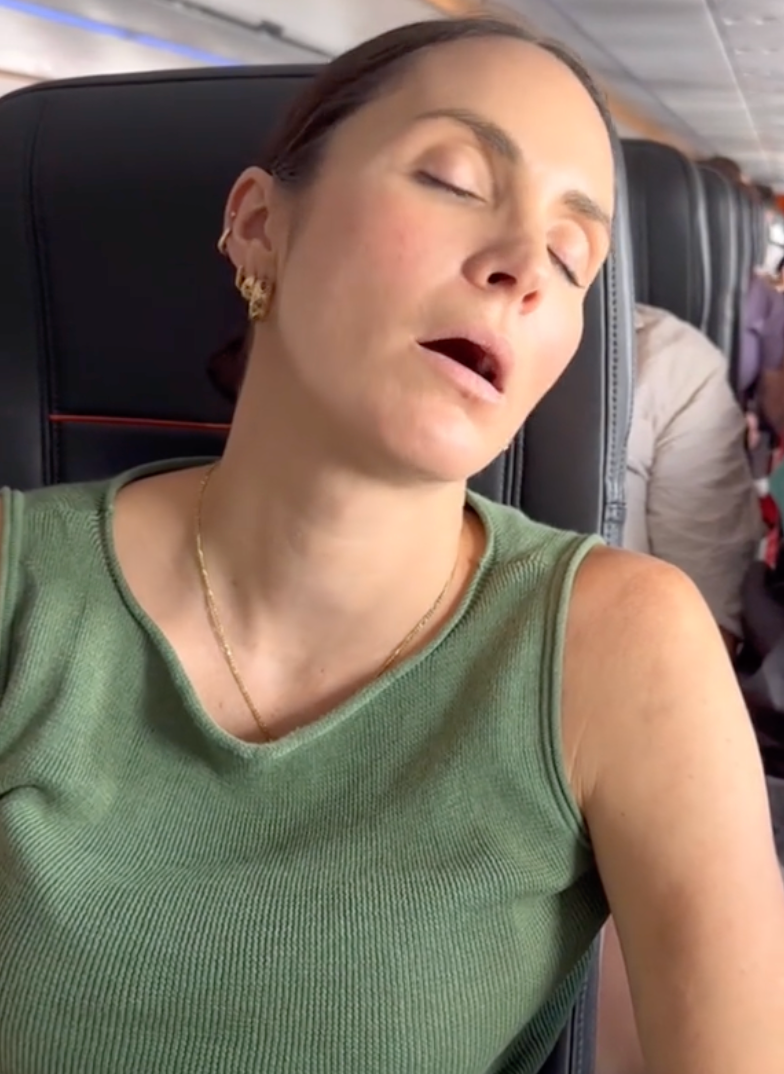
Screenshot from TikTok video by Matthew David Johnson (@matthewdavidjohnson): https://www.tiktok.com/@matthewdavidjohnson/video/7484407853269273864
Category: Travel Pillows
Author: Product Developer (Independent, No Sponsorships)
Written by a product developer who reviews travel gear with zero sponsorships.
Clear, technical breakdowns of materials, ergonomics, and real-world use.
Table of Contents
- Why Side Sleeping on Planes Is So Difficult
- Why Most Travel Pillow Designs Fail for Side Sleepers
- The Mechanics of Side Sleeping in Airplane Seats
- Best Travel Pillows for Side Sleepers on Planes
- Which Design Actually Works Best for Side Sleepers?
- Final Verdict
- FAQ
Why Side Sleeping on Planes Is So Difficult
Why Do Airplane Seats Make Side Sleeping Hard?
Airplane seats are built for passengers sitting upright, not for people who naturally sleep on their side. Side sleepers discover that pretty quickly. The backrest angle, the narrow headrest, and the limited space around the shoulders all assume that the passenger’s head will remain mostly vertical. For side sleepers, that geometry immediately becomes a problem. The moment you lean your head sideways, there is very little structure in the seat that helps stabilize the neck. Instead of resting comfortably, your head ends up floating slightly away from the seat, which forces your neck muscles to keep working even while you try to relax.
Why Is There No Support for Your Head When You Lean Sideways?
Most aircraft headrests are designed to prevent the head from falling backward, not sideways. Even seats with adjustable “wings” usually sit too low or too narrow to actually hold the head in a side-leaning position. When a passenger tries to sleep against the window or lean toward the aisle, the head often loses contact with the seat entirely. That means the neck becomes the only structure supporting the weight of the head. A typical travel pillow doesn’t fix this problem either. Many designs simply add soft cushioning around the neck. The problem is that cushioning alone doesn’t create real lateral support.
Why Does Your Head Drift Once You Fall Asleep?
The final challenge appears once the body relaxes. When you first lean sideways, the neck muscles still provide some stability. But as you begin to fall asleep, muscle tone gradually decreases. Without firm side support, gravity starts pulling the head downward. The result is the familiar sideways “head drop” that wakes many travelers during flights. If you’ve tried sleeping on a plane, you probably know that moment. This is exactly why a travel pillow for side sleepers on planes seats has to do more than just feel soft. It needs to actively stabilize the head and neck against the sideways movement created by the seat’s geometry.
Why Most Travel Pillow Designs Fail for Side Sleepers
Why Do U-Shaped Travel Pillows Struggle With Side Sleeping?
Most travel pillows are built around the same basic idea: wrap a soft collar around the neck and let it cushion the head. I break down this design problem in more detail in my analysis of why most travel pillows fail on long flights. That concept works reasonably well for people who sleep upright. But side sleepers put the pillow in a completely different position.
When you lean your head sideways in an airplane seat, the weight of the head shifts laterally rather than forward. A typical U-shaped pillow simply wasn’t designed to resist that direction of movement. Instead of holding the head in place, it often leaves a gap between the pillow and the side of the head. Most side sleepers recognize that moment almost immediately. The pillow feels fine for a few minutes, then the slow slide begins. The result is familiar to many travelers: the head slowly slides until the neck muscles wake you up again.
For a travel pillow for side sleepers on planes seats to work, it needs to stabilize sideways movement. Most U-shaped designs focus on comfort and softness, but they rarely create a firm structure that prevents the head from drifting when the passenger leans to one side.
Why Does Foam Compression Make Side Sleeping Harder Over Time?
Another issue appears after the pillow has been used for a while during the flight. When you first put on a travel pillow, the foam usually feels supportive. But over the course of several hours, the material compresses under the weight of the head.
As the foam softens, the support height gradually decreases. For side sleepers, that small change is enough to destabilize the head position. The neck angle slowly shifts, and the pillow begins to feel less supportive than it did at the beginning of the flight.
This is one reason travelers often feel comfortable for the first few minutes and then find themselves adjusting their pillow repeatedly later. The support changes as the material compresses, and the sideways stability that side sleepers need disappears.
Why Isn’t Cushioning the Same as Real Support?
Many travel pillows focus on comfort first. Soft fabrics, plush foam, and thick padding all feel good when you first try the pillow. But cushioning alone does not create real structural support.
Side sleeping on an airplane seat is fundamentally a stability problem. Once the neck muscles relax, gravity starts pulling the head downward and sideways. Without a firm structure that resists that movement, the pillow simply compresses and moves with the head.
That is why many designs feel comfortable at first but fail during actual sleep. A travel pillows for side sleepers on planes seats has to do more than just feel soft. It has to stabilize the head against lateral movement, something most traditional travel pillows were never designed to do.
The Mechanics of Side Sleeping in Airplane Seats
Why Does Headrest Height Often Misalign With Your Neck?
Airplane seats are designed around an average sitting posture, where the passenger’s head remains mostly upright. The headrest is meant to support the back of the head and upper neck in that position. But once a passenger leans sideways, that alignment changes almost immediately.
For many travelers, the headrest no longer sits behind the head at all. It often ends up somewhere closer to the upper back or shoulder area instead. When that happens, the head loses the stable surface it would normally rest against. The neck becomes the only structure holding the weight of the head in place.
For side sleepers, that mismatch between headrest height and neck position is one of the main reasons sleeping on a plane feels unstable. The seat was never designed to support the head from the side. Instead, it assumes the head will stay mostly upright. As a result, the neck muscles remain slightly engaged even when the rest of the body is trying to relax.
This mismatch between headrest height and neck alignment is one reason many airplane seats cause neck strain during long flights. I explain this problem in more detail in my breakdown of why airline headrests make neck pain worse.
Why Do Window and Aisle Seats Create Different Sleeping Conditions?
The window seat changes the mechanics of side sleeping in a noticeable way. When a passenger leans toward the window, the aircraft wall can act as a secondary support surface. In some cases, that extra contact point helps stabilize the head enough to make short periods of sleep possible.
That’s one reason many side sleepers instinctively prefer the window seat. It’s not perfect support, but it’s better than nothing. I explore this seat-position effect in more detail in my guide to the best seat to sleep on a plane.
The aisle seat usually removes that option. With nothing beside the head, the body must rely entirely on the neck and any pillow being used. Even a small shift in posture can cause the head to drift outward toward the aisle.
Because of that difference, side sleeping often feels much less stable in the aisle seat than it does near the window.
Why Is Side Sleeping Ultimately a Stability Problem?
Side sleeping on a plane is mostly a stability problem, not a comfort problem.
When you first lean sideways, your neck muscles still provide some support. But once the body begins to fall asleep, those muscles gradually relax. Without something preventing sideways movement, gravity slowly pulls the head downward and outward.
This is when many travelers experience the familiar sideways “head drop.” The moment the head tilts too far, the neck muscles suddenly react and wake the passenger again.
That cycle is what makes sleeping on planes so frustrating for side sleepers. A travel pillows for side sleepers on planes seats therefore has to do more than simply cushion the neck. It needs to create a stable structure that resists sideways movement and keeps the head aligned even after the body relaxes.
Best Travel Pillows for Side Sleepers on Planes
Choosing a travel pillows for side sleepers on planes seats requires looking at a different set of design features than most travelers consider. Many pillows are built for upright sleeping, where the head rests mostly against the seat. Side sleepers put the pillow in a completely different position. Instead of supporting the back of the neck, the pillow has to stabilize the head as it leans sideways.
That difference changes what actually works during a flight. Pillows that rely mainly on soft foam often struggle to keep the head from drifting once the neck muscles relax. Designs that provide firmer structure, side support, or controlled chin stabilization tend to perform better for side sleepers.
In the following sections, we’ll look at several travel pillow designs and explain how each one behaves when a passenger tries to sleep sideways in a typical airplane seat.
Trtl Travel Pillow
The Trtl Travel Pillow takes a very different approach from most travel pillows. It isn’t really a pillow in the traditional sense. Instead of surrounding the neck with soft foam, the Trtl uses an internal support brace wrapped inside a fleece scarf. That internal frame acts almost like a lightweight neck support, creating a fixed point where the head can lean without collapsing sideways.
For side sleepers on planes, this design solves one of the main problems discussed earlier: lateral head drift. When positioned correctly, the brace supports the jaw and cheek on one side, which helps keep the head from dropping once the neck muscles relax. Because the support comes from a structured frame rather than foam height, the Trtl can stabilize the head even when the seat itself offers very little side support.
Another advantage is that the design does not depend on the airplane headrest height. Traditional pillows often rely on the seat behind you to complete the support system. The Trtl works more like a wearable brace, meaning it can provide stability even when the headrest sits too low or too far back.
However, this approach also introduces a few limitations. The pillow supports only one leaning direction at a time. If you want to switch sides during the flight, you need to unwrap and reposition the brace. In a tight airplane seat, that usually means waking up to adjust it.
Comfort is also different from traditional memory-foam pillows. The fleece wrap softens the contact points, but the internal frame is still noticeable during longer flights. Some travelers appreciate the stability it provides, while others find it less relaxing than a softer pillow.
For travelers who sleep on their side, the Trtl offers a compact and mechanically clever solution. It prioritizes stability and portability over plush comfort, which makes it particularly appealing for travelers who value support and packability more than cushioning.
J-Pillow
The J-Pillow takes a noticeably different approach from most travel pillows. Instead of wrapping evenly around the neck like a typical U-shape, it uses an asymmetrical form designed to support the chin, side of the face, and neck at the same time. The longer arm of the pillow sits under the chin, while the curved upper section presses against the side of the head. In theory, this creates a three-point support system that reduces the forward head slump many travelers experience during flights.
For side sleepers on planes, this design can actually make sense. When you lean sideways, the pillow supports the chin from below and cushions the side of the head at the same time. In a window seat, the aircraft wall often becomes part of the support system. The head rests against the pillow, the pillow presses into the window, and the neck muscles finally get a chance to relax.
Unlike brace-style pillows, the J-Pillow relies mostly on shape and filling rather than internal structure. The inside uses soft polyester fiber, so the pillow feels plush when you first lean into it. That softness is comfortable, but it also means the support depends heavily on posture and seat position.
If you stay leaning in one direction, the design can work surprisingly well. But once the position changes, its limits become obvious. In aisle or middle seats, where there is nothing solid to lean against, the pillow loses much of the stability it normally provides.
For travelers looking for a travel pillows for side sleepers on planes seats, the J-Pillow can work well in the right situation. It performs best for window-seat travelers who plan to lean in one direction for most of the flight. Outside of that setup, it behaves more like a soft cushion than a true support system.
Travelrest Ultimate
The Travelrest Ultimate takes a completely different approach from most travel pillows. Instead of wrapping around your neck, it creates a long inflatable support column that runs diagonally across your torso. The idea is simple: give travelers something solid to lean against even when there is no window wall nearby.
For side sleepers on planes, this design changes the mechanics quite a bit. Rather than stabilizing the neck directly, the pillow creates a surface for your upper body and head to rest on. When positioned correctly, you lean forward or slightly sideways into the inflated column. That shifts some of the weight away from the neck and onto the pillow itself.
In theory, that sounds like a perfect solution for aisle or middle seats. In practice, it works best when your posture stays fairly consistent. The pillow acts more like an inflatable beam than a cushion. If you maintain the same leaning angle, it can feel surprisingly supportive. But if your body shifts even slightly during sleep, the support point moves with it.
Inflation level also matters more than most people expect. Slight under-inflation makes the pillow comfortable but unstable. Fully inflating it creates stronger support but can feel firm against the shoulder or face. There is a narrow “sweet spot” where the pillow provides both stability and comfort.
Another advantage is portability. Because the pillow is inflatable, it packs much smaller than most foam designs. Once deflated, it rolls into a compact shape and clips easily onto a bag, which is one reason frequent travelers like it.
For travelers looking for a travel pillows for side sleepers on planes seats, the Travelrest Ultimate offers a creative solution, especially for aisle and middle seats where traditional pillows struggle. It works best for people who can stay in one posture while sleeping. If you tend to shift positions often, the diagonal support system can become harder to maintain.
Cabeau Evolution S3
The Cabeau Evolution S3 looks like a traditional memory-foam travel pillow at first glance, but one feature defines the entire design: the elastic straps that attach the pillow to the airplane seat. The goal is straightforward. Instead of letting the pillow move with your head, the straps anchor it to the headrest so the pillow stays in place while you sleep.
In theory, that solves one of the biggest problems travelers face. Most neck pillows drift as soon as the neck muscles relax. The S3 tries to stop that by fixing the pillow’s position relative to the seat rather than the passenger.
When the seat has a proper headrest, this system can reduce sideways movement. The pillow stays centered while the raised memory-foam sidewalls support the jaw and cheeks. In that situation, the design feels noticeably more stable than a typical U-shaped pillow.
But the system only works when the geometry lines up. If the seat has no headrest or the straps slide down the seatback, the pillow loses its main advantage and behaves like a normal horseshoe pillow. That happens more often than the marketing suggests.
Another limitation is the front design. The S3 uses a tension toggle that pulls the arms inward but keeps a small gap under the chin. That means there isn’t actually a firm cushion preventing forward head drop. The pillow performs better when the seat is reclined, where gravity helps keep the head supported.
Fit also varies with neck height. The raised sidewalls work well for longer necks, but for shorter travelers they can press into the ears rather than supporting the jaw.
For travelers searching for a travel pillows for side sleepers on planes seats, the Evolution S3 offers an interesting idea: stabilize the pillow by attaching it to the seat. When the headrest alignment works and the straps hold position, the pillow can feel more stable than many traditional designs. When those conditions aren’t present, the benefit largely disappears.
Which Design Actually Works Best for Side Sleepers?
Side sleeping on a plane turns out to be less about softness and more about stability. Most travelers assume the best travel pillow is simply the softest one. But once your neck muscles relax during a flight, softness alone doesn’t help much. The real question is whether the pillow can stop the head from drifting once gravity takes over.
That’s where the design differences start to matter. Some pillows try to stabilize the head with structure. Others rely mostly on foam cushioning. And some designs depend on the airplane seat itself to complete the support system.
Once you start paying attention to how these designs behave during actual flights, the differences become surprisingly obvious.
Do Brace Designs Work Better Than Foam Pillows?
Brace-style designs, like the Trtl pillow, solve the problem in a fairly direct way. Instead of surrounding the neck with foam, they create a firm support point that your head can lean against. Once the head settles against that support, it tends to stay there.
Traditional foam pillows work differently. They feel comfortable at first, but foam gradually compresses under the weight of the head. After a while the support height drops slightly, and the head starts drifting again. That’s the moment many travelers wake up and readjust the pillow.
Is Chin Support More Important Than a Neck Collar?
Most travel pillows are built like a soft collar around the neck. That design can feel cozy, but it often leaves a gap under the chin. When the head tilts forward or sideways, there is nothing stopping the movement.
Designs with under-chin support try to fix that. The J-Pillow is a good example. By supporting the chin from below, the pillow limits how far the head can drop once the body relaxes.
Do Some Pillows Depend Too Much on the Seat?
Some pillows only work well when the airplane seat becomes part of the system. Window-lean pillows or seat-strap designs rely on the seat to stabilize the head.
When everything lines up, they can work surprisingly well. But change the seat type, remove the window wall, or move to an aisle seat, and that support disappears quickly.
Seat-independent designs tend to be more predictable. They may not always feel as comfortable at first, but they usually behave the same way regardless of where you’re sitting.
Final Verdict
Side sleeping on a plane is harder than most travelers expect, and the reason usually isn’t the pillow itself. It’s the seat geometry. Airplane seats are designed for upright posture, not for heads leaning sideways once the neck muscles relax.
Because of that, no single travel pillow works perfectly in every situation. Each design solves a slightly different version of the problem. Brace-style pillows create a fixed support point that can stabilize the head without relying on the seat. Chin-support designs focus on preventing the forward collapse that often wakes travelers during flights. More traditional foam collars prioritize comfort but often struggle to control sideways movement over time.
For travelers looking for a travel pillows for side sleepers on planes seats, the key is matching the pillow design to how you actually sleep. If you lean in one direction and stay fairly still, structured or chin-support designs usually perform better. If you shift positions frequently, softer pillows may feel more comfortable even if they offer less stability. In other words, the best travel pillow isn’t the softest one. It’s the one that actually matches how you sleep.
FAQ
Can you sleep on your side on a plane?
Yes, but airplane seats make true side sleeping difficult. Most aircraft seats are designed for upright posture, not for leaning sideways. When you try to sleep on your side, the head usually loses contact with the headrest and the neck muscles end up doing most of the work. That’s why many travelers wake up repeatedly with their head dropping or drifting. Side sleeping becomes easier when there is something stable to lean against, such as the window wall or a pillow that provides firm lateral support.
What travel pillow works best for side sleepers?
The best travel pillows for side sleepers on plane seats is usually one that stabilizes the head rather than simply cushioning the neck. Brace-style designs, chin-support pillows, or structured side-support pillows tend to perform better than traditional soft collars. The key is preventing sideways drift once the neck muscles relax during sleep.
Are neck pillows good for side sleeping on planes?
Most traditional neck pillows are designed for upright sleeping, not side sleeping. They wrap around the neck and provide cushioning, but they often leave gaps that allow the head to tilt sideways. That’s why many foam neck pillows feel comfortable at first but struggle to keep the head stable during longer flights.
Is the window seat better for side sleepers?
Yes, the window seat usually gives side sleepers a clear advantage. The airplane wall can act as a stable surface to lean against, which helps reduce head movement during sleep. Without that support, such as in aisle or middle seats, the neck muscles have to work harder to keep the head stable.
Why do most travel pillows fail for side sleepers?
Most travel pillows fail for side sleepers because they focus on softness rather than stability. Once the neck muscles relax, gravity pulls the head sideways. If the pillow doesn’t provide firm side support or chin stabilization, the head begins to drift, which eventually wakes the traveler up.