


Most people walk onto a United flight with a travel pillow and nothing happens. Others get stopped at the gate and told to put it away or squeeze it into a bag. Same airline, same flight, different outcome.
So what’s actually allowed?
United’s rules sound clear on paper. In real boarding lines, enforcement is messier. It depends on how your pillow looks, how you carry it, and whether it slows things down.
This breaks down what actually happens at the gate, not just what the rules say.
If you want a full breakdown of how travel pillows are treated across airlines and where the rules actually come from, see my full analysis here.
If you’re trying to figure out whether travel pillows are actually allowed at the gate (not just counted as a carry-on), I break that down for United flights here.
Short answer: yes, travel pillows are usually allowed on United flights, but they’re not always ignored at the gate.
Category: Travel Pillows
Author: Product Developer (Independent, No Sponsorships)
Written by a product developer who reviews travel gear with zero sponsorships.
Clear, technical breakdowns of materials, ergonomics, and real-world use.
Table of Contents
- Are Travel Pillows Allowed on United Flights (Official Rules)?
- What Actually Happens at the Gate
- Why Enforcement Feels Random
- When You’re Likely to Get Stopped
- When You Usually Get Through
- Quick Reality Check
- Final Verdict
Are Travel Pillows Allowed on United Flights (Official Rules)?
United doesn’t come out and say “travel pillows are allowed” or “not allowed.” They mostly ignore them.
What they do say is simple: you get one carry-on and one personal item. That’s the only rule that really matters.
So where does a neck pillow fit?
If you’re trying to figure out whether pillows count as a carry-on item specifically, I break that down separately here.
If it’s worn or stays close to your body, it usually slides through without being counted. That’s why most people bring one and never think about it.
The issue starts when it looks like something extra. If it’s bulky, in your hand, or clearly separate from your bags, it can get treated as a third item.
On paper, that’s the rule. In practice, it depends on how your setup looks at the gate.
What Actually Happens at the Gate
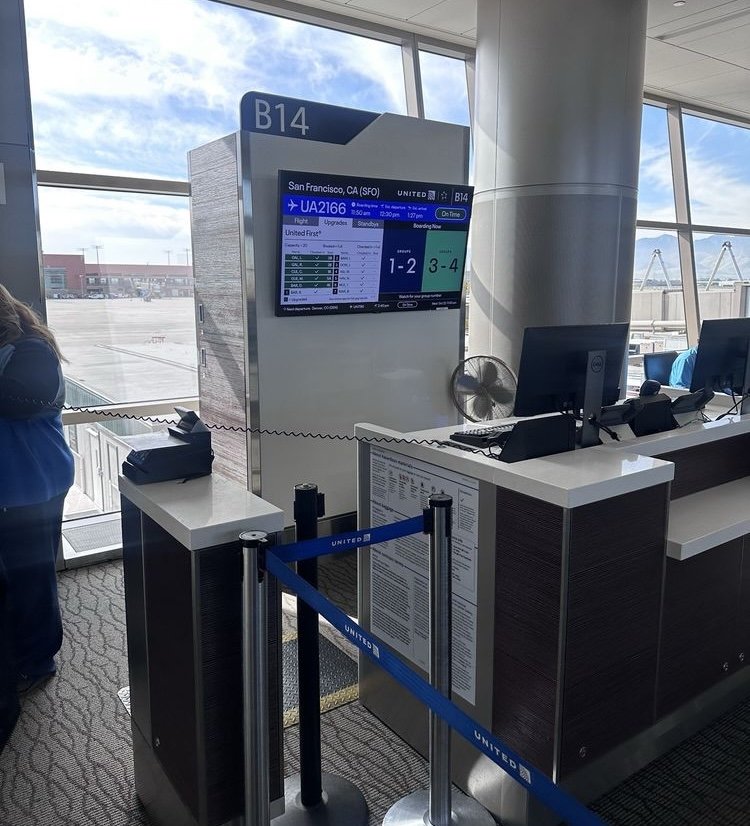
Most people just walk through
Most of the time, nothing happens.
People board with a neck pillow around their neck, clipped to a bag, or stuffed into a backpack, and nobody says a word. If it looks like part of what you’re already carrying, it usually gets treated that way.
That’s why a lot of people assume it’s never an issue. It also explains why enforcement can look different from one airline to another. I broke down how Delta handles this in practice here.
When people get stopped
It changes the moment something stands out.
A pillow in your hand. A bulky foam collar that looks like its own item. Or a setup that already looks like too much before you even get to the scanner.
That’s when you see people get stopped and told to put it away or squeeze it into a bag.
It’s not really about the pillow. It’s about what stands out in that moment.
The gap between rules and reality
On paper, the rule is simple. At the gate, it’s fast.
Agents aren’t standing there thinking through policy. They’re looking for anything that slows the line or takes up space.
That’s why the same pillow goes through on one flight and gets flagged on another. Nothing changed about the rule. Just the situation around it.
Why Enforcement Feels Random
It depends on who’s at the gate
Not every gate agent handles this the same way.
Some barely look up and just keep the line moving. Others scan everything and stop anything that looks like an extra item. It’s not a different rule. It’s just how strict that person is in that moment.
Crowd pressure changes things fast
On a quiet flight, nobody cares about your pillow.
On a full flight, the same setup suddenly gets attention. Overhead space is tight, people are stacking bags, and anything that looks loose or extra stands out.
That’s when pillows start getting noticed.
It’s really about speed
Boarding isn’t about perfect rule enforcement. It’s about not slowing things down.
If you walk up with everything in place, you usually get through. If you’re holding things, adjusting bags, or trying to figure it out at the gate, that’s when someone steps in.
It feels random when you’re in it. But once you see what they’re reacting to, it’s actually pretty consistent.
When You’re Likely to Get Stopped
When it looks like its own item
This is where it usually starts.
If your pillow looks separate from everything else, it stands out. A bulky foam pillow in your hand, hanging off your bag, or just sitting on top like it didn’t belong there.
That’s the kind of thing gate agents notice right away.
It’s not really about the pillow. It just looks like one more thing. If you want to see why certain setups get flagged faster than others, I break that down in more detail here.
When you already look overloaded
A carry-on, a backpack, maybe a jacket over your arm… and then a pillow on top of that.
That’s usually when it tips over.
Even if everything technically fits the rules, the whole setup starts to look like too much. That’s when someone takes a second look.
People who get stopped usually aren’t doing anything extreme. It just looks like they’re carrying one thing too many.
When you hesitate at the gate
You see it happen all the time.
Someone gets to the scanner, starts adjusting their bags, tries to clip the pillow on, drops something, picks it back up.
That’s the moment they get noticed.
Once you slow things down, the pillow becomes the easiest thing for them to question.
When You Usually Get Through
When it’s part of what you’re wearing
The people who never get stopped usually just wear the pillow.
Around the neck, maybe slightly off to the side, but clearly part of what they’re already using. It doesn’t look like an extra item, so it doesn’t get treated like one.
When everything looks under control
You notice this pretty quickly.
Some people walk up with everything contained. Bag on the shoulder, carry-on rolling, nothing loose, nothing hanging off.
Even if they have a pillow, it’s either tucked in or clipped in a way that doesn’t stand out.
Those setups rarely get a second look.
When they just keep moving
The smooth ones don’t pause.
They scan their boarding pass, keep walking, and don’t give anyone a reason to look twice. No adjusting bags, no juggling items, no trying to fix things at the last second.
That’s usually all it takes.
Quick Reality Check
It’s not really about the rule.
It’s about how your setup looks in that moment.
A small pillow around your neck usually gets ignored. The same pillow in your hand, with a couple of extra things, suddenly stands out.
That’s the difference.
Not the policy. The friction.
Final Verdict
Travel pillows are usually fine on United flights. Most people walk through with one and nothing happens.
But every now and then, someone gets stopped.
It’s not really about whether pillows are allowed. It’s about how your setup looks when you get to the gate.
If it blends in, no one cares. Across airlines, the pattern is the same. I’ve seen it play out in Delta boarding as well. If it stands out, it can turn into a problem fast.