


Are seat-strap travel pillows allowed on planes? After a viral Alaska Airlines red-eye incident, many travelers are questioning whether travel pillows that attach to seats comply with FAA and airline safety rules. For a broader breakdown of airline enforcement patterns, see my full guide to seat-strap travel pillow rules.
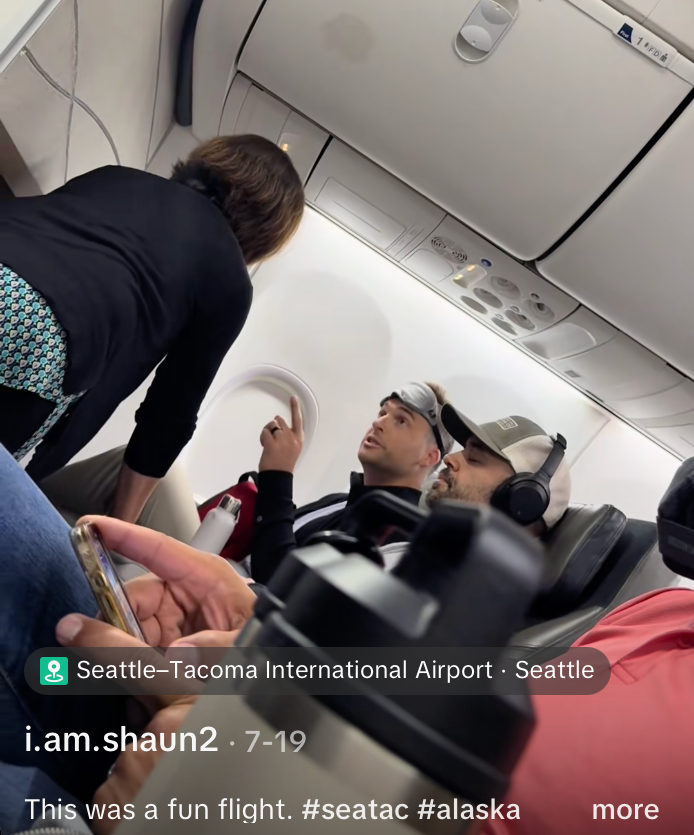
Image credit: TikTok / @i.am.shaun2 (used for news reporting and analysis)
Category: Travel Pillows
Author: Product Developer (Independent, No Sponsorships)
Written by a product developer who reviews travel gear with zero sponsorships.
Clear, technical breakdowns of materials, ergonomics, and real-world use.
Table of Contents
- What Happened on the Alaska Red-Eye
- What the FAA Actually Says
- Why Airlines Reject Seat-Strap Pillows
- Are Travel Pillows Allowed on Planes?
- Safer Alternatives
- Final Verdict
- FAQ
What Happened on the Alaska Red-Eye
According to the creator’s summary:
- The passenger had a travel pillow strapped around the headrest.
- The crew asked him to remove it.
- He insisted it was allowed and refused at first.
- After some back and forth he removed it.
- Crew still considered him noncompliant.
- Pilot and supervisor agreed to remove him.
- The whole aircraft had to deplane to resolve the situation.
Source:
TikTok video documenting the Alaska Airlines red-eye incident
Source video (TikTok): https://www.tiktok.com/@i.am.shaun2/video/7528552352836521247
The pillow did not trigger the removal.
Noncompliance did.
But the object itself matters because passengers often don’t realize that attachments to aircraft seats are not allowed during critical phases of flight.
What the FAA Actually Says About Travel Pillows
There is no FAA rule that mentions travel pillows, straps, or headrests directly. Instead, the FAA’s cabin safety guidance focuses on a broader requirement: carry-on items must not interfere with seat structure, evacuation, or access to safety equipment. It sounds obvious, but this rule ends up covering a surprising number of travel gadgets.
The relevant document is AC 121-29B, which outlines how items must be stowed so they do not obstruct movement or affect certified aircraft components.
Source: FAA Advisory Circular AC 121-29B
https://www.faa.gov/documentlibrary/media/advisory_circular/ac121-29b.pdf
How Airlines Interpret This Rule
Because AC 121-29B does not list specific products, airlines convert the guidance into practical, operational standards. Most crews are trained to remove or question items that:
- attach to seat frames
- wrap around headrests
- restrict seat movement
- alter how the seat functions
- block access during an evacuation
These are airline interpretations of FAA safety guidance, not explicit FAA rules.
In practice the rule becomes simple:
If an item attaches to the seat and could affect safety, movement, or access, crew may instruct passengers to remove it. This is why strap-based travel pillows often fall under non-permitted items during takeoff and landing.
Why Airlines Reject Seat-Strap Travel Pillows
From a design standpoint, these products create several problems. The issue usually isn’t obvious when you first put the pillow on.
1. They interfere with seat movement
A strap around the headrest can restrict how the seat returns upright or reclines.
This is exactly the limitation I measured when testing strap-based designs like the Cabeau Evolution S3.
2. They alter a certified surface
Aircraft seats are certified safety components.Attaching devices can technically modify that component.
3. They become evacuation hazards
Anything that delays a passenger from exiting the seat row becomes a safety issue.
4. Crew authority is non-negotiable
If you resist an instruction about an attachment, crew must escalate.This is exactly what happened on the Alaska red-eye.
Are Travel Pillows Allowed on Planes?
Yes.
Neck pillows worn around your body are allowed during all phases of flight. This is why fully body-supported designs like the Trtl and BCOZZY tend to cause fewer issues. What gets you in trouble is seat attachment. Examples crews may reject:
- pillows strapped around headrests
- buckles or loops securing the pillow to the seat
- devices clipped to tray tables
- foot hammocks attached to tray supports
This is why crew can allow a standard memory foam pillow but reject a strap-based design minutes later.
Safer Alternatives That Do Not Violate Airline Rules
If you want stable support without any compliance issues, choose pillows that stay on you, not the aircraft.
Good options include:
- structured wrap pillows (Trtl style)
- tall memory foam pillows for head support
- chin-support pillows (BCozzy style)
- J-shaped pillows
- hooded body-worn pillows
These remain airline-compliant because they never interfere with the seat.
Final Verdict
Seat-strap travel pillows are not banned by name, but they fall under FAA guidance requiring crews to remove any object attached to aircraft seats.
The Alaska red-eye video is a clear example.
The pillow was not the real issue. The refusal to comply was.
For trouble-free comfort:
- avoid straps
- avoid buckles
- avoid anything looping around the seat
Choose options that stay on your body.
You stay comfortable.
The crew stays relaxed.
The plane stays in the air instead of returning to the gate.
Takeaway:
If you’re considering buying a pillow that straps to the seat, understand the airline-dependence and the risk of interruption. This isn’t about the product being bad. It’s about knowing the rules before you board. For a deeper look at how enforcement varies by airline, see my full seat-strap rules guide.
Related Guides
- Seat-Strap Airline Rules Explained
- Trtl Review
- BCOZZY Review
- Cabeau Evolution S3 Review
FAQ
Are strap-based pillows banned by the FAA?
Not explicitly, but FAA rules require crews to remove anything attached to aircraft seats or their mechanisms.
Can I use a neck pillow during takeoff and landing?
Yes, as long as it is worn on your body and not attached to the seat.
Why did the Alaska red-eye passenger get removed?
Noncompliance. The pillow sparked the conflict, but refusal to follow crew instructions triggered removal.
Are foot hammocks allowed?
Often no. Many airlines ask passengers to remove them because they attach to tray-table structures.
Can airlines enforce stricter rules than the FAA minimum?
Yes. Airlines can prohibit items even if FAA does not name them specifically.
So, are seat strap travel pillows allowed on airplanes?
In practice, it depends on airline enforcement and crew discretion.