


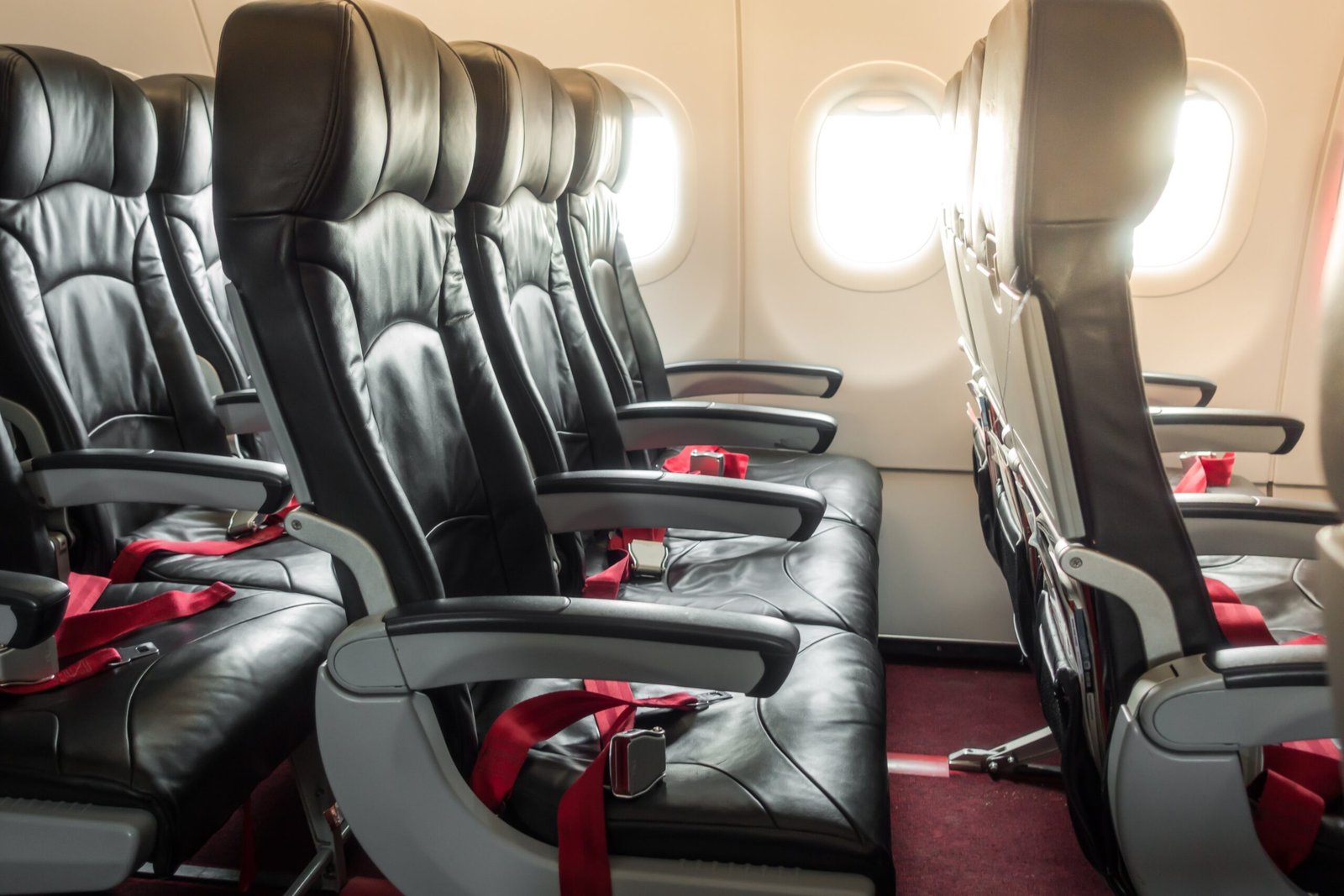
Sleeping on a plane is less about pillows and more about seat position. The window, aisle, and middle seat each place the neck under different mechanical stresses, especially in economy class cabins. Choosing the best seat to sleep on a plane can significantly reduce neck pain by improving stability and alignment during rest. This guide compares window, aisle, and middle seats based on real neck support, movement control, and long-haul comfort, so you know which seat actually works when sleep matters.
Category: Travel Pillows
Author: Product Developer (Independent, No Sponsorships)
Written by a product developer who reviews travel gear with zero sponsorships.
Clear, technical breakdowns of materials, ergonomics, and real-world use.
Table of Contents
- Why Seat Choice Matters More Than Pillows
- Window Seat: The Most Stable Option for Sleeping
- Aisle Seat: Why It’s the Worst for Neck Support
- Middle Seat: Is There Any Situation Where It Works?
- How Seat Choice Interacts With Travel Pillows
- Best Seat Choice by Flight Type and Sleep Style
- Conclusion: Choose the Seat First, Then the Pillow
Why Seat Choice Matters More Than Pillows
Most travelers try to solve in-flight neck pain by buying better pillows. This makes sense emotionally. Pillows are visible, portable, and heavily marketed. Seats are not. But mechanically, the seat determines how your body is positioned for hours, while the pillow only reacts to that position.
For a breakdown of which pillow designs are even allowed to work in this environment, see my analysis of seat-strap travel pillow rules.
In economy class, the seat controls back angle, headrest depth, recline range, and lateral stability. These factors define where your spine and head settle once muscles relax. If the seat places your head too far forward or offers poor side support, no amount of padding can fully correct it. The pillow is working inside a flawed structure.
Why Does Seat Geometry Affect Neck Alignment?
Seat geometry determines how the torso, shoulders, and head stack vertically. Shallow backrests and limited recline push the upper body into a semi-upright position. In this posture, gravity pulls the head forward and slightly downward. If the headrest does not counter this force properly, the neck must compensate continuously. Over time, this leads to fatigue and misalignment.
Why Pillows Can’t Fully Compensate for Bad Seats
Most travel pillows are soft, adjustable, and lightweight. These qualities make them comfortable initially, but they also limit structural control. When placed against a poorly aligned seat, the pillow compresses or shifts rather than correcting posture. Instead of stabilizing the head, it adapts to the seat’s flaws.
In practice, the seat sets the mechanical limits. Pillows can reduce discomfort within those limits, but they cannot redefine them. This is why many travelers keep buying new pillows without ever fixing the real problem.
Window Seat: The Most Stable Option for Sleeping
For most travelers, the window seat offers the best structural conditions for sleeping on a plane. Unlike aisle and middle seats, it provides a fixed surface along one side of the body. This physical boundary reduces uncontrolled head movement and limits the gradual collapse that leads to neck strain.
The cabin wall functions as an external stabilizer. When the head leans sideways, it encounters a firm, immobile surface rather than empty space. This allows neck muscles to relax more fully without losing alignment. Over long flights, this lateral support becomes more important than cushioning.
Window seats also experience fewer external disruptions. There is no passing traffic, fewer armrest conflicts, and less need to shift position for other passengers. Reduced movement helps maintain consistent posture and prevents repeated micro-adjustments that fatigue the neck.
Why Does the Window Seat Provide Better Neck Support?
Side contact is the key factor. When the head rests against the window wall or padded panel, part of its weight is transferred away from the neck. This reduces forward drift and stabilizes rotation. Combined with slight seat recline, this creates a more neutral resting position than other seat locations allow.
In addition, window seats encourage a slight inward lean. This aligns the head closer to the center of mass, lowering mechanical strain on cervical muscles.
When Does the Window Seat Still Fail?
Not all window seats provide equal support. Poor padding, curved walls, or misaligned headrests can limit stability. Very tall passengers may find the contact point too low, forcing awkward angles. Cold surfaces and vibration can also disrupt sleep.
In these cases, the window seat remains preferable, but its advantage is reduced.
Aisle Seat: Why It’s the Worst for Neck Support
From a neck-support perspective, the aisle seat is usually the worst place to sleep on a plane. It removes the one thing the neck needs most during rest: lateral stability. With open space on both sides, the head has nowhere to settle once muscles begin to relax.
In an aisle seat, gravity pulls the head forward and sideways at the same time. Without a fixed surface to lean against, the neck must constantly self-correct. Even when this effort is subtle, it adds up over hours, leading to stiffness and soreness by the end of the flight.
Movement makes the problem worse. Passing passengers, service carts, and seat-mates getting up repeatedly force small posture changes. Each interruption breaks whatever fragile alignment you had, pushing the neck back into active support mode instead of rest.
Why Does the Aisle Seat Cause More Neck Strain?
The aisle seat lacks side boundaries. Without lateral contact, the head either drifts forward into a chin-to-chest position or tips outward, increasing rotational strain. Pillows struggle here because they compress or slip without something solid to brace against. The neck ends up doing the stabilizing work alone.
Who Should Still Choose the Aisle Seat Anyway?
Despite its drawbacks, the aisle seat can make sense for certain travelers. People who wake frequently, need to stand or stretch often, or have long legs may prioritize mobility over sleep quality. On short flights, or when sleeping isn’t the goal, the aisle seat’s convenience can outweigh its lack of neck support.
For actual sleep, however, it remains the least forgiving option.
Middle Seat: Is There Any Situation Where It Works?
The middle seat is rarely chosen for sleep, and for good reason. It combines the limitations of both aisle and window seats without fully benefiting from either. While it offers two armrests, it lacks a fixed side surface and provides minimal control over head movement during rest.
In the middle seat, the head has no natural place to settle. Leaning left or right risks encroaching on neighboring passengers, which most people subconsciously avoid. This keeps the neck in a guarded, semi-active position even when trying to relax. Over time, this constant low-level tension leads to discomfort rather than rest.
Why the Middle Seat Rarely Supports Sleep
The main issue is constrained lateral movement. Without permission to lean fully in either direction, the head tends to fall forward. This chin-to-chest posture increases strain on the cervical spine and accelerates muscle fatigue. Pillows offer limited help because they cannot create space where social and physical boundaries exist.
Seat width also plays a role. Middle seats are often the narrowest, reducing shoulder freedom and making it harder to maintain neutral alignment. Any shift in posture usually affects both neighbors, discouraging adjustment.
When the Middle Seat Can Be Acceptable
There are limited situations where the middle seat works reasonably well. Short flights, light sleep, or traveling with familiar companions can reduce the discomfort. Smaller passengers who use compact pillows and remain mostly upright may also tolerate it better.
For sustained sleep, however, the middle seat remains a compromise rather than a solution.
How Seat Choice Interacts With Travel Pillows
Travel pillows do not work in isolation. Their effectiveness depends heavily on the seat environment they are used in. The same pillow can feel supportive in one seat and useless in another, not because the product changed, but because the surrounding structure did.
I break this down in detail in my comparison of wrap and loop designs, showing how Trtl and Infinity behave differently depending on seat position.
Pillows are designed to manage contact points, not to replace missing support. When seat geometry provides stability, a pillow can fine-tune comfort. When the seat lacks that stability, the pillow is forced to compensate beyond its mechanical limits.
Which Pillows Work Best in Window Seats?
Window seats allow pillows to function as intended. With a solid surface on one side, pillows can help distribute pressure, reduce friction, and limit small movements rather than fighting gravity alone. Softer designs tend to perform better here because they can mold against the window wall without collapsing completely. Even minimal padding can be effective when the seat itself controls head position.
Wrap-style or scarf-style pillows, such as the Trtl, also benefit from window support because they rely on consistent contact points to maintain tension.
Why Aisle Seats Break Most Pillow Designs
In aisle seats, pillows must act as both support and anchor. Without lateral boundaries, soft pillows compress and shift, while firmer designs push the head into unnatural angles. Any movement from passing traffic or posture changes disrupts alignment.
Most pillows are not built to stabilize the head in open space. In aisle seats, they end up chasing motion instead of controlling it, which limits their effectiveness over time.
Best Seat Choice by Flight Type and Sleep Style
The best seat for sleeping on a plane depends not only on location but also on flight length and individual sleep behavior. Different conditions place different demands on neck support and stability.
Best Seat for Long-Haul Overnight Flights
On overnight or long-haul flights, sustained stability matters more than short-term comfort. Window seats are usually the best option because they allow extended side support and reduce repeated posture corrections. Over many hours, this minimizes cumulative strain. Aisle seats perform poorly in this context due to frequent disruptions and lack of lateral support. For overnight rest, stability should take priority over convenience.
Best Seat for Short or Daytime Flights
On shorter flights or daytime routes, deep sleep is less critical. Light rest and intermittent dozing are more common. In these situations, aisle seats become more acceptable, especially for travelers who prefer movement or frequent stretching. Middle seats remain less comfortable, but discomfort is more tolerable over shorter durations.
When sleep is brief, mobility and personal habits may outweigh strict neck support.
Best Seat for Side vs Forward Sleepers
Side sleepers benefit most from window seats, where the head can lean against a stable surface. This reduces rotational strain and supports natural alignment. Forward sleepers, who tend to collapse toward the chest, may struggle in all seat types but perform best in window seats with mild recline and supportive pillows.
Understanding your natural sleep posture helps narrow seat choice more effectively than relying on generic recommendations.
Conclusion: Choose the Seat First, Then the Pillow
Sleeping well on a plane depends more on where you sit than on what you bring with you. Seat location determines stability, posture, and how much work your neck must do during rest. Pillows can improve comfort within those limits, but they cannot override poor seat mechanics.
Window seats consistently offer the most reliable support, while aisle seats remain the most challenging for sustained sleep. Middle seats fall somewhere in between, depending on circumstances and tolerance. Understanding these trade-offs leads to better decisions than relying on product claims alone.
By choosing the seat first and adjusting accessories second, travelers can reduce discomfort, avoid unnecessary purchases, and manage long-haul fatigue more effectively.