


This Cabeau Evolution S3 Travel Pillow Review looks at whether the seat-strap system actually improves neck support on real flights.
The S3 is designed to lock the pillow to the airplane seat to prevent forward head fall, which sounds clever on paper. In practice, that design introduces trade-offs that depend heavily on neck size, seat type, and how the system is used in a real cabin.
Below is the full breakdown.
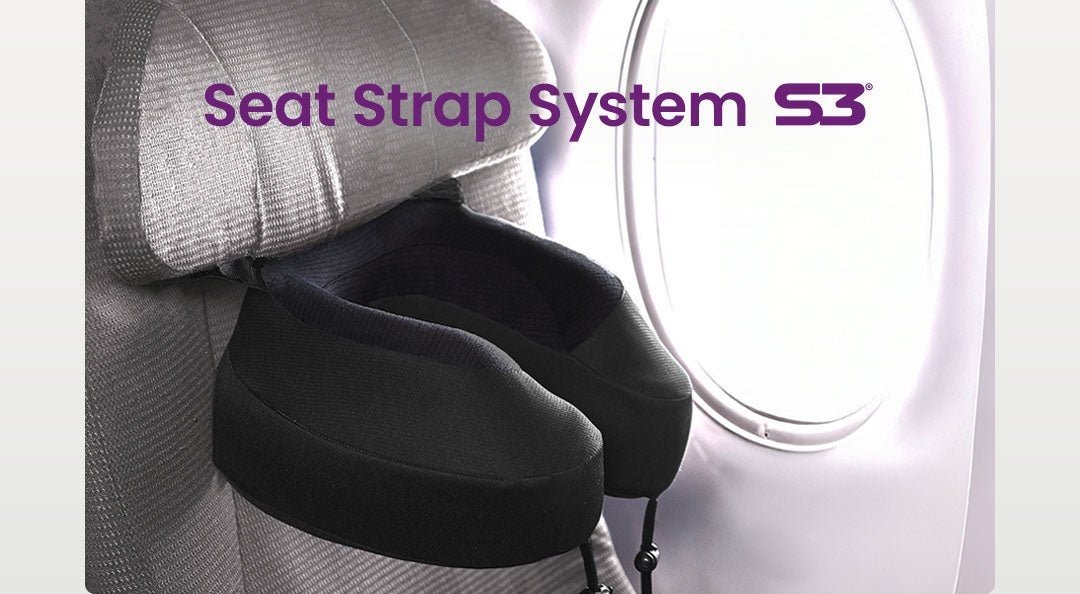
Image credit: cabeau.com (used for product review purposes only).
Category: Travel Pillows
Author: Product Developer (Independent, No Sponsorships)
Written by a product developer who reviews travel gear with zero sponsorships.
Clear, technical breakdowns of materials, ergonomics, and real-world use.
Table of Contents
- Design Overview
- My Take (from a product developer)
- Real-World Limitations
- What Travelers Are Saying
- Final Scores
- Verdict
- FAQ
Design Overview
The Evolution S3 is built on the same general silhouette as the Evolution Earth pillows from this brand, but it adds one signature feature that defines the entire product: the seat-strap system.
Key design elements:
- microfiber face panel for comfort against the skin
- stretchy fabric in the other areas
- memory-foam core with raised sidewalls for cheek and jaw support
- elastic Velcro straps along the top to wrap around a headrest
- spring-loaded front cinch that narrows or widens the front opening
- small storage pocket for items like earbuds
- removable, machine-washable cover
- compact travel bag with a buckle for attaching to luggage
The overall geometry is very similar to the Evolution Earth from the same brand. If you want a deeper breakdown of how that shape behaves structurally and ergonomically, my Cabeau Evolution Earth review explains that design in more depth.
My Take (from a product developer) on the Cabeau Evolution S3 Travel Pillow
Does the Design and Structure Actually Support the Neck?
The S3 introduces one big mechanical idea: the straps that attach to the seat. They are elastic, covered with Velcro, and designed to hook around the headrest so your head stays anchored instead of tilting forward or sideways. That system defines how the pillow behaves. When the seat has a proper headrest, the straps can add stability. When the seat has no headrest at all, the straps have nowhere to go. In that case the pillow behaves like a regular U-shape and loses its main selling point.
When the seat has a proper headrest, the straps can add stability. When there is no headrest, the instructions say you can secure the straps around the seat itself. In practice, this does not hold well. The straps tend to slide down the seatback because there is nothing for them to grip on. The pillow cannot maintain the intended height, so the stability benefit disappears.
This is my red flag here. If I plan to use a travel pillow only on flights, anything that attaches to the seat makes me pause. In my post about the incident on Alaska Red-Eye flight and the FAA guidance behind it, I break down why seat-strapped accessories can draw attention from crew. Once something fastens to part of the seat structure, it can fall into the category they may ask you to remove.
The front tension system is the next structural element. Instead of allowing the two arms to overlap and close the gap under the chin, the tensioner actually pulls the arms in while keeping a space in the center. That means there is no real cushion directly under the chin. When your head leans forward, there is nothing substantial to land on. The design works better when the traveler is reclined, not upright, because the support relies on the angle of the seat rather than a true forward brace. On any seat that is upright or lightly reclined, the S3 behaves more like a structured horseshoe with a gap in the front than the 360-degree support the marketing suggests.
The overall shape is nearly identical to the Evolution Earth, including the raised sidewalls. That geometry favors travelers with longer necks. For shorter or average neck lengths, the sides sit too high and start pressing into the cheeks or ears.
Are the Materials and Memory Foam High Quality?
The S3 uses two different fabrics for two different purposes.
The top panel, the part that sits against your cheek and jaw, is a soft microfiber. It’s comfortable, smooth, and clearly chosen for skin contact. The rest of the cover switches to a stretchy synthetic knit that feels durable, has good elasticity, and holds up well when pulled or compressed. The entire cover is removable and washable.
The internal foam is standard mid-density memory foam. It has good rebound and doesn’t collapse instantly the way cheaper foams do, but like any mid-density core, it softens after body heat builds up. You get initial support, then a gradual reduction as the foam warms.
The adjustment hardware consists of two things:
- the elastic Velcro straps designed to attach to a seat or headrest
- the front tension toggle that pulls both arms together
The spring-loaded front cinch narrows or widens the front opening. This system always leaves a gap between the two arms, you never get real under-chin cushioning. That also means the materials never create true 360-degree support despite the marketing language.
Like the Evolution Earth, the S3 also uses a very thin back panel. Same outcome: it feels comfortable at first, but that thin section is the part most likely to soften, fold, or break down under repeated compression. Once that happens, the ergonomic benefit disappears. If you want a deeper breakdown of how that shape behaves structurally and ergonomically, my Evolution Earth review explains that design in more depth.
Will the Pillow Hold Up Over Time and Repeated Flights?
The memory foam itself holds up reasonably well. It rebounds reliably, avoids the cheap “instant collapse” effect, and maintains its height during the first phase of use. But like most mid-density foams, it softens as body heat builds up. On long flights, that gradual softening reduces the support the pillow can deliver.
The bigger durability concern is the thin back panel. This design is the same weakness found in the Evolution Earth: the back is so slim that it becomes the structural weak point. Under sustained spinal pressure, the panel tends to crease, fatigue, and eventually break along the same stress line. Once that happens, the pillow loses its main ergonomic advantage and begins to feel uneven or collapsed in the very area meant to support your spine.
The external fabrics themselves hold up fine. The microfiber top stays comfortable and doesn’t pill quickly, and the stretchy knit feels sturdy enough to survive washes. The zipper is smooth and doesn’t snag. None of those are the problem.
The long-term risk is simple:
The tension toggle at the front is basic plastic hardware, but strong enough to last.
So while the materials can technically survive multiple uses, the structural thinness of the back section puts a limit on how long the pillow maintains its intended performance.
Does the Shape Work for Different Neck Lengths and Postures?
This is where the Evolution S3 becomes inconsistent.
The raised sidewalls are designed to cradle the jawline and keep the head stable, but the geometry assumes a specific neck height. For many travelers with shorter or average neck lengths, the side panels sit too high. Instead of supporting the jaw, they press into the ears or cheeks.
The front tension toggle also creates a fixed gap between the two arms. This means there is no real cushion directly under the chin, even though the product claims 360-degree support. If your head tends to fall forward when you sleep upright, the S3 doesn’t offer a reliable solution. The support works better if the seat is reclined, where forward fall is less of an issue.
When the seat has a proper headrest, the elastic seat straps can reduce lateral drift and help keep your posture centered. But the straps do not improve comfort; they only increase stability. And as mentioned earlier, securing a pillow to the seat can trigger crew requests to remove it in certain flight conditions, which interrupts the entire experience.
Without the straps engaged, the pillow behaves like a standard U-shape.
The back panel’s slim profile does help prevent the common “forward head push,” which is a nice ergonomic advantage. But that same thinness is also what fatigues over time, making long-haul support unpredictable.
Overall, the ergonomics are heavily dependent on your proportions. For some, it aligns well enough. For many others, the chin gap, raised sides, and headrest strap system create more inconvenience than benefit.
Real-World Limitations
Here’s where the Evolution S3 struggles in actual travel conditions:
- Attachment concerns on flights.
Because this pillow fastens to the seat, it falls into the category of products crews may ask you to remove depending on airline policy and the situation. Even one interruption defeats the entire purpose of a sleep accessory. - The seat-strap system is unreliable in actual use.
On seats without a headrest, the straps can only wrap around the seat back, and in reality they tend to slide down over time. The stability promised in marketing does not consistently hold up. - The front gap removes forward-lean support.
The tension toggle keeps the pillow open in front, which means there is no cushioning under the chin. If your head falls forward, there is nothing to prevent that drift. - Raised sidewalls press into ears for many neck types.
Travelers with shorter or average neck heights often find the raised sides sitting too high, folding the ear or pushing into earbuds. - The thin back panel fatigues over time.
The flat-back design is comfortable initially, but repeated compression on long flights causes it to soften, crease, or collapse along the same stress point. - Comfort changes dramatically when reclining.
Upright seating exposes the lack of forward support. Reclining improves comfort, but the side panels still may not line up for many body shapes.
For long-haul flights, these issues add up.
The Evolution S3 can work in short, controlled scenarios, but the support system feels inconsistent over time and across different seat types.
What Travelers Are Saying (Amazon, YouTube, Reddit)
What Do Users Like About the Evolution S3?
- Very soft face-panel material
- Performs better when the seat is reclined
- Headrest straps help keep it from sliding
- Washable cover appreciated
- Carry case is convenient and easy to pack
What Complaints Appear Most Often in Reviews?
- Ear pressure for smaller or shorter-neck travelers
- Strap placement sits too high or never reaches under the chin
- Requires very precise adjustment, hard to do in cramped seating
- Forward-fall support is weak due to the front gap
- Jaw/cheek pressure increases if tightened
- Thin back panel can feel unstable
- Can get warm around the raised sides
Final Scores
Scores reflect engineering performance, not just comfort.
How Good Is the Support and Stability?
Support & Stability: 6.5/10
The headrest straps help with sliding, but the front gap and inconsistent cheek/ear pressure limit true stability. Works best only in reclined positions.
How Comfortable Are the Materials?
Material & Comfort: 7/10
The microfiber face panel is genuinely pleasant, and the foam is decent. But the raised sides cause discomfort for many neck shapes, and warmth builds over time.
Is It Easy to Use in Tight Seats?
Ease of Use: 6.5/10
Easy to put on the seat and easy to wear, but finding the “right spot” requires trial-and-error. The front tension system never feels naturally cozy below the chin.
How Portable Is It for Travel?
Packability: 8/10
Good travel bag and straightforward packing. Not the smallest footprint, but better than most U-shape pillows.
Does It Stay Comfortable on Long Flights?
Long-Haul Performance: 6/10
Comfort drops steadily as hours pass. The front gap offers weak forward support, ear pressure increases, and the thin back panel is prone to fatigue over longer use.
Verdict
The S3 shares the same general shape as the Evolution Earth but adds the headrest-strap system. The microfiber face panel is genuinely comfortable, the foam works well, and in a reclined seat the pillow feels stable.
The strap system is the dividing line. It can help in specific aircraft seats, but it also introduces airline-dependence. As covered in my Alaska Red-Eye post (and the FAA context behind it), anything fastened to the seat can be questioned by crew. Add to that the fit issues: raised sides that hit the ears on shorter necks and a strap that doesn’t fit everyone.
If you’re weighing structured, seat-attached designs against other travel pillow styles, my guide on how to choose the right travel pillow breaks down the tradeoffs by seat type and sleep position.
Best for:
Longer necks, reclined sleepers, and travelers whose airlines allow seat-mounted accessories.
Not ideal for:
Shorter or average neck lengths, forward sleepers, or anyone who doesn’t want to gamble with airline rules.
Bottom line:
A specialized pillow. Great for the right traveler and right airline. For everyone else, there are simpler pillows that offer more comfort per dollar.
FAQ
Can I use the Evolution S3 on any airplane?
Not always. Because the pillow straps onto the seat’s headrest, some flight crews may ask you to remove it. This depends on the airline and the situation. If you want full details, I break down the policy background in my Alaska Red-Eye + FAA guidance post.
The questions below are answered on the assumption that seat-strap pillows are allowed and usable on the aircraft. In real flights, acceptance can vary by airline, seat design, and crew discretion, etc. The answers here focus on how the designs behave when the strap system can actually be used.
Does the Evolution S3 work on seats without headrests?
You can loop it around the seat itself, but it is not stable. In practice, the straps slowly slide down the seatback and you lose the benefit of attaching it at all.
Is the Evolution S3 good for preventing my head from falling forward?
Not really. Because the tensioner keeps the front of the pillow slightly open, there is no cushion directly under the chin. Support is best in a reclined position, not upright.
Will it fit a shorter neck?
This is the biggest complaint in the reviews. The raised sidewalls push into the ears or cheeks for many travelers with shorter or average neck lengths.
Does the thin back help with posture?
It helps prevent the “pushed forward” feeling you get from thicker pillows. But the thin panel can crease or weaken over repeated use, which reduces its long-term benefit.
How is it for long-haul flights?
Inconsistent. Some travelers find it comfortable when reclined, but many struggle with ear pressure, the strap placement, and overall stability after several hours.
Is it worth the price?
It depends heavily on your neck length and whether your airline allows seat attachments. If either one is a mismatch, the value drops quickly.
Does it come with a travel bag?
Yes. The included bag is structured, zips open fully, and makes packing the pillow easier than most competitors.