


Most passengers get through with a neck pillow. Some get stopped and forced to stuff it into a bag at the gate. Same airline, same rules.
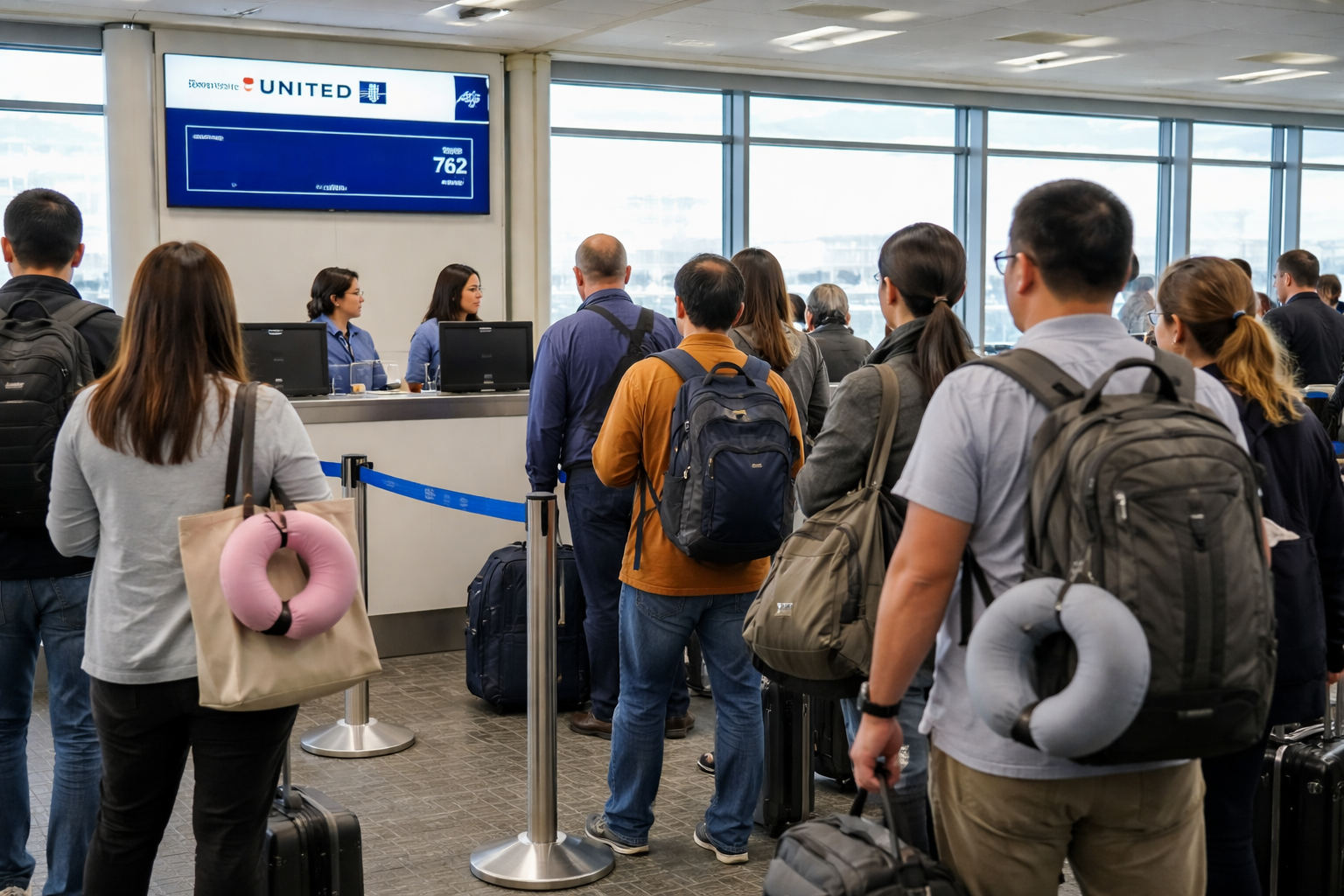
Do neck pillows count as a carry-on item on United or American? It’s a question that usually hits you with a shot of adrenaline right as you’re standing in the boarding line, watching a gate agent hawk-eye everyone’s luggage. We’ve all been there: your ‘personal item’ is stuffed to the limit, your carry-on is pushing it, and now you’re wondering if that bulky pillow around your neck is going to be the reason you’re forced to pay a $65 gate-check fee. I got tired of the ‘it depends’ answers, especially since airline rules affect different pillow designs. See my seat-strap analysis and enforcement overview for more on that. In this guide, we examine what United and American actually allow, and more importantly, what they actually do when the flight is full and the gate agents are stressed.
Quick Answer:
Soft, attached neck pillows are usually ignored. Large or loose pillows are often treated as a third item, especially on full flights.
Category: Travel Pillows
Author: Product Developer (Independent, No Sponsorships)
Written by a product developer who reviews travel gear with zero sponsorships.
Clear, technical breakdowns of materials, ergonomics, and real-world use.
Table of Contents
- What United and American Officially Say About Neck Pillows
- What Passengers Report in Real Flights
- Pattern Analysis: Why Enforcement Feels Random (and Isn’t)
- What Actually Happens in Practice
- Who This Affects Most
- Verdict
What United and American Officially Say About Neck Pillows
United Airlines: Carry-On and Personal Item Policy
United’s official baggage policy allows each passenger one carry-on bag and one personal item, such as a backpack, purse, or laptop bag. Personal items must fit under the seat in front of you, while carry-on bags must fit in the overhead bin.
United does not list travel pillows, neck pillows, or comfort supports as separate items in its published rules. They are not categorized as prohibited, restricted, or exempt. There is no specific policy stating whether a pillow counts as part of your luggage allowance.
Because pillows are not mentioned, they fall into a gray area. If a pillow is small, compressible, and attached to a bag, it is typically treated as part of existing luggage. Larger or rigid pillows carried separately may be interpreted as an additional personal item at the gate.
United also reserves the right to enforce item limits during boarding, especially on full flights or when overhead bin space is limited.
American Airlines: Carry-On and Comfort Device Policy
American Airlines follows a similar structure: one carry-on and one personal item per passenger, with strict size requirements. Personal items must fit completely under the seat.
Like United, American does not publish a separate rule for neck pillows or inflatable cushions. They are not explicitly approved or prohibited.
American’s safety policies require that loose items be stowed during taxi, takeoff, and landing. Inflatable or oversized comfort devices may be asked to be deflated or stored if they interfere with seating, aisle access, or safety procedures.
Officially, American allows pillows. In practice, size, appearance, and presentation determine how they are treated.
What Passengers Report in Real Flights
This section is based on recurring reports from frequent flyers across Reddit, airline forums, and United- and American-focused travel communities, analyzed over multiple years.
Experiences at Boarding Gates
Across Reddit and frequent-flyer forums, most United and American passengers report flying with standard neck pillows without any direct intervention from gate agents. Travelers who carry soft, compressible pillows clipped to backpacks, wrapped around luggage handles, or tucked into personal bags rarely encounter problems.
Several passengers describe boarding with a carry-on, a backpack, and a pillow multiple times without being questioned. In these cases, the pillow is usually treated as part of existing luggage rather than a separate item. Many users note that when a pillow looks integrated into their gear, agents tend to ignore it.
Problems are more likely when a pillow appears bulky, rigid, or fully separate from other bags. Travelers carrying large memory foam collars or structured supports sometimes report being stopped and asked to consolidate items before boarding.
Carry-On Enforcement on Full Flights
Reports show that enforcement increases on crowded flights and during peak travel periods. When overhead bins fill quickly, gate agents become more attentive to loose items.
Several passengers describe being asked to place their pillow inside a bag or attach it securely before boarding. Others report being told that a large pillow counted as a third item and needed to be stowed or checked.
On United flights in particular, users note that rules are applied more strictly when flights are oversold or when boarding zones become congested. On American, similar behavior appears during busy domestic routes and holiday travel periods.
In these situations, enforcement is often about managing space rather than targeting pillows specifically.
Comfort Devices and Gray Areas
Travel pillows are not the only comfort items discussed in forums. Many threads also reference inflatable footrests, headrest attachments, and seat-mounted supports.
Some travelers report using these devices without issue, while others were told they were not allowed. Inflatable pillows are usually permitted, but multiple users note being asked to deflate them during taxi, takeoff, or landing.
Passengers frequently describe confusion when different crew members apply different standards on separate flights. The same device may be ignored on one trip and questioned on another.
Across platforms, the consistent theme is variability. Most travelers experience no issues, but outcomes depend heavily on how noticeable the item is and how strictly a specific agent chooses to apply policy.
Pattern Analysis: Why Enforcement Feels Random (and Isn’t)
When you compare Delta, United, and American passenger reports side by side, a consistent pattern emerges. Enforcement is not driven by formal policy alone. It is driven by visibility, load pressure, and time constraints at the gate.
Similar enforcement patterns appear on Delta flights, where passengers report the same visibility-based decision making at boarding, as detailed in our Delta airline enforcement breakdown. Southwest takes a somewhat clearer approach to normal neck pillows, which it excludes from the standard carry-on limit. Seat-attached designs are still a separate issue, though, so I broke down the current Southwest travel-pillow rules in more detail here.
Size and Visual “Bulk” Matter More Than Policy
Across airlines, small, compressible neck pillows rarely trigger intervention. When a pillow is soft, clipped to a bag, or partially tucked into luggage, it is often ignored. In contrast, rigid memory foam pillows, large wrap-style designs, or pillows carried loosely attract attention.
From an operational perspective, this makes sense. Gate agents scan for items that look like additional baggage. A pillow that appears bulky or separate from approved luggage is more likely to be classified as a third item, regardless of official wording.
Boarding Pressure Drives Stricter Enforcement
Enforcement intensity increases when flights are full, boarding is delayed, or overhead bin space is limited. Under time pressure, agents prioritize speed and compliance over individual judgment.
In these conditions, borderline items are more likely to be challenged. Passengers boarding late, standing out with multiple loose items, or struggling to consolidate belongings are at higher risk of being stopped.
This explains why the same pillow may pass unnoticed on one flight and be questioned on another.
Presentation Shapes Agent Interpretation
How a pillow is carried matters almost as much as its size. Passengers who wear neck pillows, secure them tightly to backpacks, or stow them inside bags report fewer problems.
Loose pillows held in hand, dangling from straps, or placed on top of luggage are more likely to be interpreted as separate items. Agents make rapid visual assessments, not detailed rule evaluations.
From a systems perspective, enforcement follows perception first, policy second.
What Actually Happens in Practice
The majority of travelers who carry a standard neck pillow, especially one that is soft, compressible, or attached to a bag, board Delta, United, and American flights without being questioned. On lightly loaded flights or during smooth boarding, pillows are usually ignored entirely.
Problems tend to appear only when several risk factors stack together: a full flight, limited overhead space, tight boarding timelines, and a passenger carrying multiple loose items. In these situations, gate agents may intervene and ask travelers to consolidate their pillow into a bag or treat it as part of their personal item.
During flight, cabin crew rarely focus on neck pillows unless they interfere with safety procedures. Passengers are occasionally asked to stow bulky pillows during takeoff and landing, particularly if the pillow blocks movement, seat access, or seatbelt visibility. Inflatable pillows may also be requested to be deflated during safety phases. Some designs are easier to manage than others, as shown in our comparison of wrap-style and loop-style travel pillows.
In practical terms, enforcement is passive by default and reactive under pressure. Most travelers will never be challenged. A small minority will encounter stricter interpretation, usually driven by operational constraints rather than written rules.
The outcome is not random. It reflects how visible, bulky, and inconvenient the pillow appears in that specific moment.
Who This Affects Most
This issue mainly affects travelers who carry their neck pillow separately instead of packing it into a bag.
Passengers with a backpack and small carry-on who clip a soft pillow to their luggage are rarely affected. Their setup looks compact and organized, which reduces scrutiny at boarding.
Travelers who already carry multiple loose items are more exposed. A tote bag, shopping bag, jacket, and pillow together are more likely to trigger enforcement, especially on full flights. In these cases, the pillow becomes the easiest item for agents to challenge.
Users of large, rigid, or structured pillows face the highest risk. These designs are harder to compress and more likely to appear as an extra item. Structured designs like the Cabeau Evolution Earth are more likely to trigger attention if carried loosely. Traditional U-shaped ones like the BCOZZY pillow are easier to compress but can still draw scrutiny when carried separately. Inflatable pillow users may also be affected during takeoff and landing if asked to deflate and stow them.
Frequent flyers tend to adapt quickly. Many learn to pack or attach their pillow before boarding to avoid attention. Infrequent travelers are more likely to carry pillows loosely and encounter problems.
This topic matters most to travelers who prioritize comfort but travel close to baggage limits.
Verdict
Will United or American Count Your Neck Pillow as a Carry-On?
Officially, no! They are considered ‘personal comfort devices.’ But here is the ‘grumpy traveler’ reality: if the flight is full and you’re carrying a massive, fluffy pillow that looks like a third bag, a tired agent will call you out on it.
To stay under the radar, follow these rules of thumb:
– Small, soft pillows attached to your bag are almost never an issue. In normal boarding conditions, they pass without a second look.
– Large, rigid, or loose pillows held in your hands are a real risk. On busy flights, agents frequently treat these as a third item and will force you to stow or compress them.
– Inflatable pillows are usually tolerated, but be prepared to deflate them if an agent decides to be strict during boarding.
My Pro-Tip: Wear the pillow around your neck or snap it to your backpack before you reach the gate. Gate agents are looking for extra bags, not extra ‘clothing.’ Don’t give them a reason to look twice, and you’ll keep your $65 in your pocket instead of giving it to the airline.