


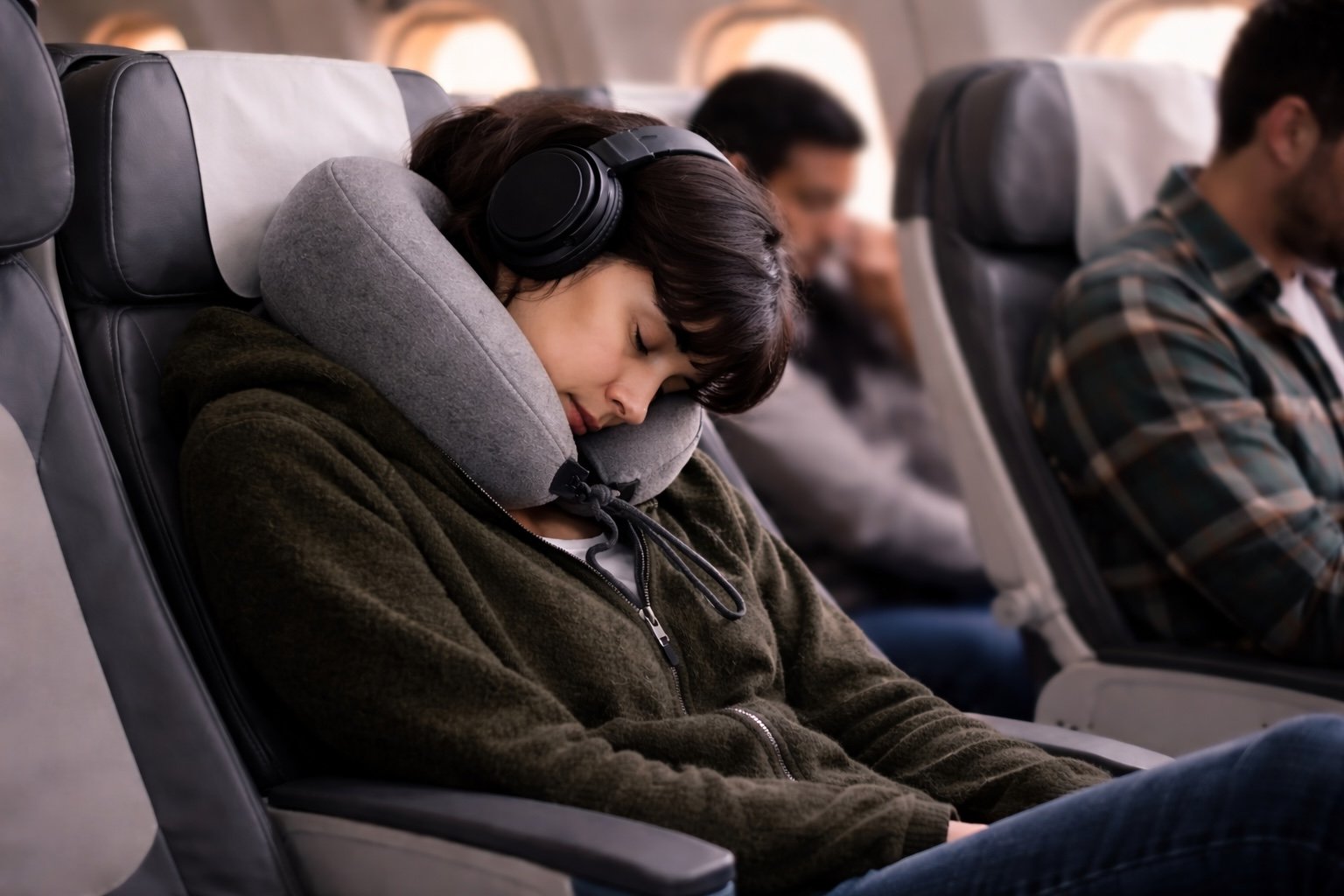
Most travel pillows for long flights are designed for short naps, not hours of upright sleep. On multi-hour trips, common issues like forward head drop, collapsing foam, poor chin support, and mismatched seat geometry start to show. What feels comfortable for the first 20 minutes often fails once your posture changes, the foam warms up, or the seat reclines unevenly.
The problem isn’t that travelers are choosing the “wrong” pillow. It’s that many popular designs prioritize softness and portability over long-duration ergonomics. In this article, I break down why most travel pillows struggle on long flights, which design choices cause those failures, and what actually works when you need real support for hours in an upright seat.
Below is the full breakdown.
Category: Travel Pillows
Author: Product Developer (Independent, No Sponsorships)
Written by a product developer who reviews travel gear with zero sponsorships.
Clear, technical breakdowns of materials, ergonomics, and real-world use.
Table of Contents
- Why Travel Pillows Feel Comfortable at First and Fail Later
- The Core Design Problems Behind Most Travel Pillows
- Why Long Flights Expose These Failures
- Seat Geometry Matters More Than Most People Realize
- Common Travel Pillow Designs and Where They Break Down
- What Actually Works for Long-Haul Support
- How to Choose a Pillow Based on Your Flight and Body Type
- The Bottom Line on Comfort vs Real Support on Long Flights
Why Travel Pillows Feel Comfortable at First and Fail Later
Most travel pillows don’t fail immediately. In fact, many feel good during the first few minutes. The foam is soft, the fabric is cozy, and the neck feels “supported enough” while you’re still upright and alert. That early comfort is exactly why so many pillows get positive first impressions.
The failure shows up with time.
As your muscles relax, gravity takes over. Memory foam warms and softens. Fabric stretches. The head slowly drops forward or sideways, and the pillow’s shape no longer matches your neck or jaw. What felt supportive at boarding becomes passive cushioning rather than real support.
This isn’t about poor quality. It’s about duration. Most travel pillows are designed to feel pleasant at first contact, not to maintain alignment for hours of seated sleep. Short naps hide this weakness. Long flights expose it.
Another issue is static design assumptions. Many pillows assume an upright seat, a fixed posture, and minimal movement. Real flights are dynamic. Seats recline unevenly. People shift. Heads tilt. Pillows that don’t actively resist those changes gradually stop doing their job.
That’s why travelers often describe a pillow as “comfortable at first, then useless later.” The materials and shapes weren’t built for sustained load, heat, and movement over time.
Understanding this pattern explains why softness alone rarely leads to good long-haul performance.
The Core Design Problems Behind Most Travel Pillows
Most travel pillows struggle because they’re built around simplified design assumptions that don’t hold up in real airplane seats. The problem isn’t one specific feature. It’s a combination of compromises that show up once posture, time, and seat geometry interact.
The first issue is fixed geometry. Many pillows are shaped around an “average” neck height and head position. In practice, neck length, shoulder width, and jaw angle vary widely. When the geometry doesn’t match the user, the pillow either sits too high, collapses inward, or fails to catch the head once it starts drifting.
The second issue is passive support. Soft foams and fabric fills rely on contact rather than resistance. They feel comfortable, but they don’t actively counter forward or lateral head movement over time. As muscles relax, these materials compress instead of stabilizing.
Seat dependence is the third problem. Many designs assume a stable, upright seatback or supportive headrest. When the seat reclines unevenly or lacks lateral structure, the pillow loses its reference point and becomes unpredictable.
Finally, most designs optimize for first-touch comfort rather than sustained load. Heat, compression, and small posture changes gradually degrade support, even if the pillow initially feels well-made.
These aren’t manufacturing flaws. They’re design trade-offs made to satisfy portability, softness, and mass appeal. The result is a product category that works briefly, then quietly stops working when real sleep begins.
Why Long Flights Expose These Failures
Most travel pillows are not exposed as failures during short use. They fail with time.
On long flights, several slow variables begin to compound. Body heat softens foam beyond its intended firmness range. Gravity continuously pulls the head forward or sideways as neck muscles relax. Small posture changes shift load paths inside the pillow, causing uneven compression that was never obvious during the first minutes of use.
What initially feels like comfort becomes instability. Sidewalls that seemed supportive begin to flatten. Chin supports lose tension. Soft inner cradles sink lower than expected, allowing the head to drift into awkward angles. None of these effects happen suddenly. They emerge gradually, which is why many pillows feel “fine” at first and disappointing hours later.
Long flights also remove external compensation. On short trips, people stay semi-alert, brace their head consciously, or adjust frequently. On overnight or multi-hour flights, that effort disappears. The pillow must do the work alone. Designs that rely on constant micro-adjustments, friction against clothing, or short-term firmness simply cannot maintain alignment without help.
Seat variability makes this worse. Recline angles change, headrests shift, and uneven seat geometry alters how forces transfer through the pillow. A design that tolerates one seat configuration may fail completely in another over time.
In short, long flights don’t create new problems. They reveal existing design weaknesses by applying heat, time, and fatigue simultaneously. Pillows built for momentary comfort rarely survive that test.
Seat Geometry Matters More Than Most People Realize
Most travel pillows are designed in isolation, as if the seat were a neutral background. In reality, the seat is an active part of the system, and its geometry often determines whether a pillow works or fails.
Airplane seats are not flat or symmetrical. The seatback angle, headrest depth, wing curvature, and lumbar contour all influence how the head loads the pillow. Even small differences in recline or headrest height change where pressure is applied and how force travels through the neck and shoulders.
Many pillows assume consistent rear support. When that assumption breaks, the pillow shifts upward, collapses unevenly, or pushes the head forward instead of stabilizing it. Flat-backed designs may behave well in one aircraft and poorly in another. Winged headrests can interfere with sidewalls, while shallow headrests provide nothing for a pillow to brace against.
Long flights amplify these mismatches. As posture relaxes, the head drifts into the path of least resistance, which is dictated by seat contours rather than pillow intent. A design that relies on the seat for alignment often loses control once the seat geometry changes mid-flight.
This is why the same pillow can feel acceptable in one seat and unusable in another. The problem isn’t inconsistency in the traveler. It’s that many pillows are not engineered to account for variable seat architecture.
Until seat interaction is treated as a primary design constraint rather than an afterthought, even well-made pillows will continue to perform unpredictably across different aircraft and seating configurations.
Common Travel Pillow Designs and Where They Break Down
Most travel pillows fall into a few recognizable design categories. The problem is not that these designs are inherently wrong, but that each one solves a narrow problem and fails outside that context, especially over long flights.
Classic U-shaped pillows rely on side height and shoulder contact. They feel familiar and soft, but their inner cradle is often too low to prevent lateral head drop. As foam warms and compresses, the sidewalls lose resistance and the head slowly rolls outward. Many also have thick back panels that push the head forward on upright seats.
Wrap-style or scarf-style designs attempt to control motion through tension rather than shape. When positioned correctly, they can reduce forward head fall better than U-shapes. Their failure point is precision. Small mismatches in neck length or tightening angle shift pressure to the jaw, cheek, or throat, making long-duration use uncomfortable.
Seat-anchored designs move the load path away from the body and toward the seat. When the seat geometry cooperates, stability can improve. When it doesn’t, alignment breaks quickly. Any change in recline, headrest height, or posture alters tension and can create new pressure points or instability.
Soft loop or fabric-based pillows prioritize comfort and adaptability. They distribute pressure well but offer little structural resistance. Without a rigid element, they cannot reliably control head position once muscles fully relax.
Across all categories, the same pattern appears: short-term comfort masks long-term instability. Designs that feel “right” in the first minutes often lack the structural control needed to perform consistently over hours of seated sleep.
What Actually Works for Long-Haul Support
Long-haul support is less about finding a “better” pillow and more about understanding what conditions must be met for support to last for hours, not minutes. Designs that work on long flights share a few structural traits, regardless of brand or category.
First, support must come from resistance, not softness. Pillows that rely on plush foam or loose fill feel good initially but lose shape as heat and time break them down. Long-haul performance requires materials or geometries that resist compression and maintain height under sustained load.
Second, the support path must be stable relative to the body. Designs that stay on the neck or torso tend to behave more predictably than those that depend on the seat. Once a pillow’s effectiveness depends on recline angle, headrest height, or strap tension tied to the seat, small changes compound into failure over time.
Third, forward head control matters more than side cushioning. On long flights, gravity gradually pulls the head forward as muscles fully relax. Pillows that address only lateral support often fail late in the flight. Designs that manage forward rotation, either through geometry or controlled contact under the chin or jaw, hold up better over hours.
Fourth, consistency beats adjustability. While adjustable or shapable pillows sound ideal, long-haul sleep favors designs that work without constant repositioning. Anything that requires frequent tightening, folding, or reshaping tends to break down as fatigue sets in.
In practice, what works for long-haul flights are pillows that accept limits: they do fewer things, but they do them reliably. They prioritize stable geometry, predictable resistance, and minimal dependence on external factors. That reliability, not novelty, is what separates short-nap comfort from all-night support.
How to Choose a Pillow Based on Your Flight and Body Type
Choosing a travel pillow for long flights isn’t just about shape names or seat types. It’s about matching design behavior to the conditions that exposed failure in the previous sections: sustained load, heat softening, posture drift, and variable seat geometry.
Start by thinking about how your body typically interacts with a pillow when you’re exhausted. If your head tends to drift forward even after brief naps, a pillow must provide reliable resistance to forward motion without collapsing. If you find yourself sliding sideways or waking up because your head rolls outward, look for stability in the lateral plane — but be wary of soft designs that feel supportive only at first contact.
Body proportions matter only insofar as they affect how forces route through a pillow over time. A short neck with broad shoulders will load the structure differently than a long neck with narrow shoulders; mismatches between pillow geometry and your own alignment tend to worsen as foam compresses or fabric shifts.
Flight context also influences what design weaknesses are most critical. On upright economy flights, pillows that depend on seatback contact or dynamic tension to work will fail as posture relaxes. On semi-reclined seats, some structural resistance becomes less essential.
The smartest choice is a pillow that resists collapse under constant load, maintains its shape with heat and time, and limits the variables that cause the failures you’ve already read about in earlier sections.
The Bottom Line on Comfort vs Real Support on Long Flights
Comfort and support are often treated as the same thing in travel pillow marketing. On long flights, they are not only different — they actively work against each other.
Comfort is immediate. It comes from softness, surface feel, and pressure relief in the first minutes of use. That’s why many pillows feel promising when you first put them on. Real support, however, only reveals itself over time. It has to resist collapse as foam warms, maintain alignment as posture drifts, and continue doing its job after hours of sustained load in an upright seat.
Most travel pillows are engineered to win the comfort test, not the endurance test. They prioritize plushness, compressibility, and broad appeal because those qualities generate positive early impressions and quick reviews. What they don’t prioritize is structural behavior after 60, 120, or 300 minutes of seated sleep.
This is why long flights expose the gap so clearly. The pillow doesn’t suddenly “fail.” It simply stops doing anything meaningful once the conditions change: heat softens materials, gravity pulls the head forward, and the seat geometry no longer cooperates.
The key takeaway is simple but uncomfortable: a pillow that feels good is not automatically helping you sleep. On long flights, real support often feels firmer, more restrictive, or less forgiving at first — because it’s designed to hold alignment, not just feel nice.
Understanding that trade-off is the difference between buying comfort and choosing support. If you want to apply this distinction to your own flight, seat type, and body posture, the full decision framework is broken down in my guide on how to choose the right travel pillow.